
 By Fatih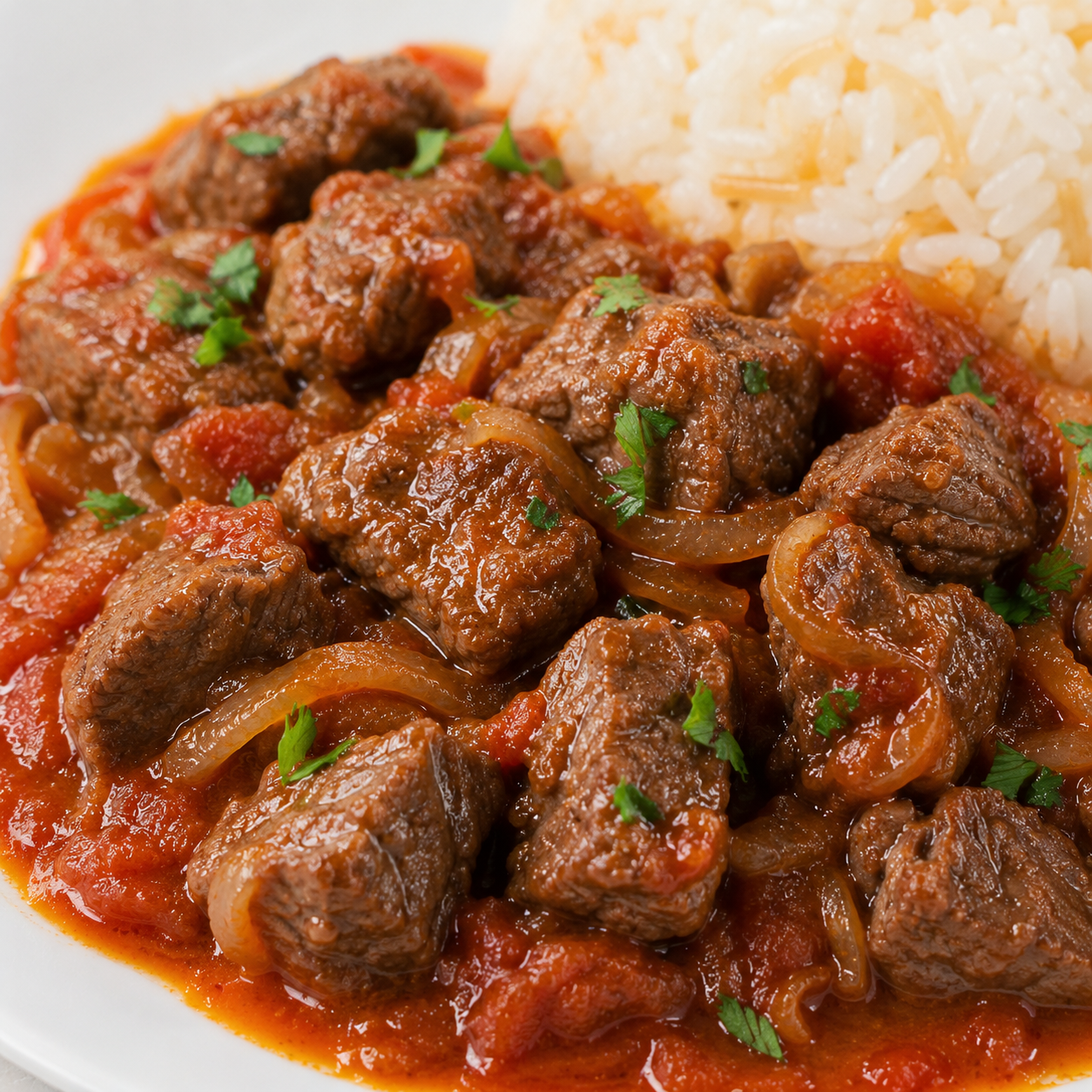
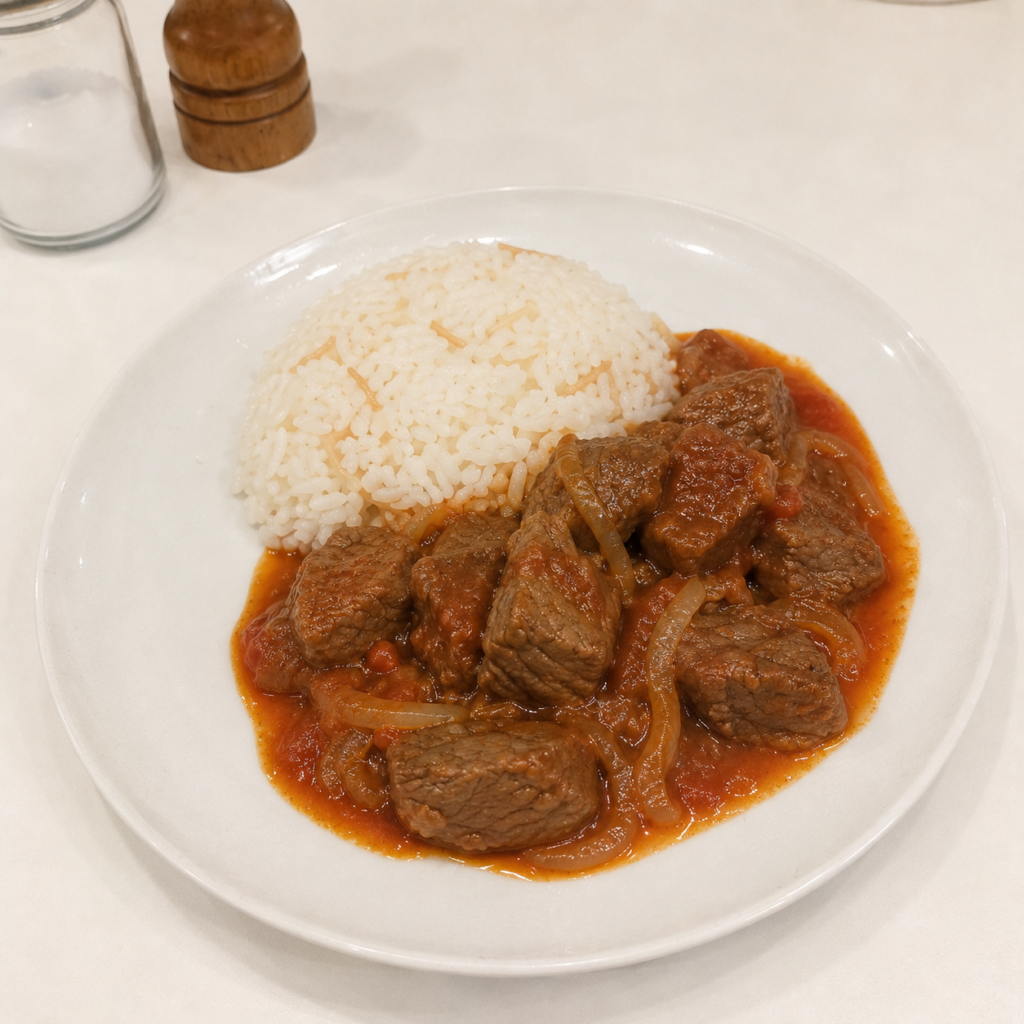
Tas Kebabı is one of the most comforting and deeply traditional dishes in Turkish home cooking — a rich, slow-cooked beef stew known for its tender meat, silky sauce, and deeply savory flavor.
Unlike grilled kebabs, Tas Kebabı belongs to the long tradition of Ottoman-style stove-cooked meat dishes where patience and gentle cooking transform simple ingredients into something luxurious.
The name “tas kebabı” comes from the Turkish word “tas,” meaning bowl or metal dish. Historically, the meat was often cooked under a weighted bowl or covered vessel that trapped moisture and allowed the stew to slowly braise in its own juices.
Over time, the dish evolved into one of Türkiye’s best-known comfort foods.
Tas Kebabı is especially popular because it combines:
- Tender beef
- Rich tomato-based sauce
- Aromatic onions
- Slow cooking
- Deeply satisfying texture
The meat becomes soft enough to almost fall apart while the sauce thickens into a glossy, flavorful gravy perfect for soaking into rice or bread.
Although every family has its own variation, authentic Tas Kebabı usually focuses on simplicity and balance rather than excessive spices.
The flavor comes mainly from:
- Slow caramelization
- Beef juices
- Tomato richness
- Onion sweetness
- Long cooking time
Served with buttery rice pilaf, pickles, or rustic bread, Tas Kebabı represents the warm, nostalgic side of Turkish cuisine — hearty, practical, and deeply comforting.
This home-style version captures the essence of traditional Turkish Tas Kebabı while remaining approachable for modern kitchens.
- Servings: 4–6
- Prep Time: 25 minutes
- Cook Time: 2 hours
- Total Time: About 2 hours 30 minutes
Ingredients
For the Beef
- 1 kg beef chuck or stewing beef
- 2 tablespoons olive oil
- 1 tablespoon butter
- 2 onions, sliced
- 3 garlic cloves, chopped
- 2 tablespoons tomato paste
- 2 tomatoes, grated
- 1 teaspoon paprika
- 1 teaspoon black pepper
- Salt, to taste
- 3 cups hot water or beef stock
- 2 bay leaves
Optional Vegetables
- 2 potatoes, cubed
- 2 carrots, sliced
For Serving
- Rice pilaf
- Rustic bread
- Pickled peppers
- Fresh parsley
Instructions
1. Prepare the Beef
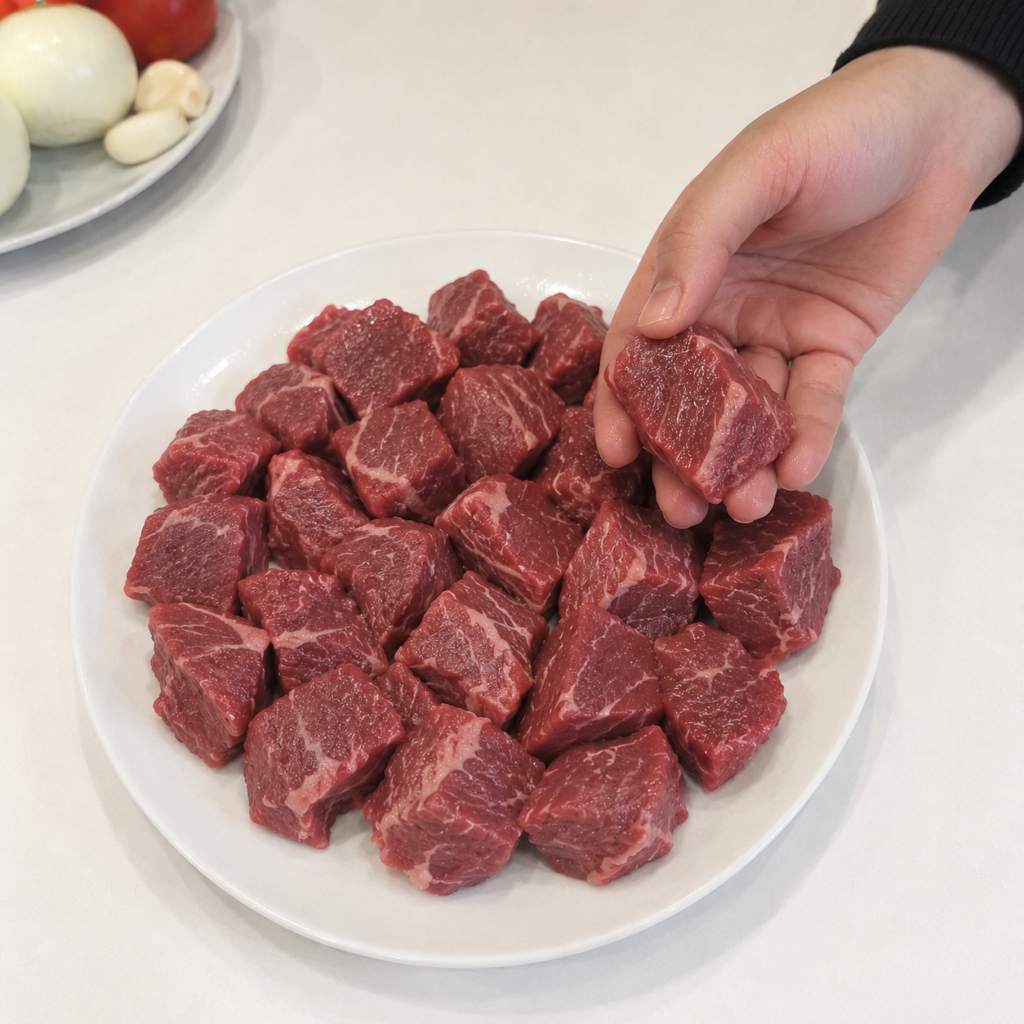
Cut the beef into medium-sized chunks.
The pieces should not be too small because long cooking naturally reduces their size.
Pat the meat dry with paper towels.
Dry meat browns more effectively and develops deeper flavor.
Traditional Tas Kebabı usually uses tougher cuts like chuck because slow cooking transforms them into tender, flavorful meat.
2. Brown the Meat
Heat olive oil and butter in a large heavy pot.
Add the beef in batches.
Do not overcrowd the pan.
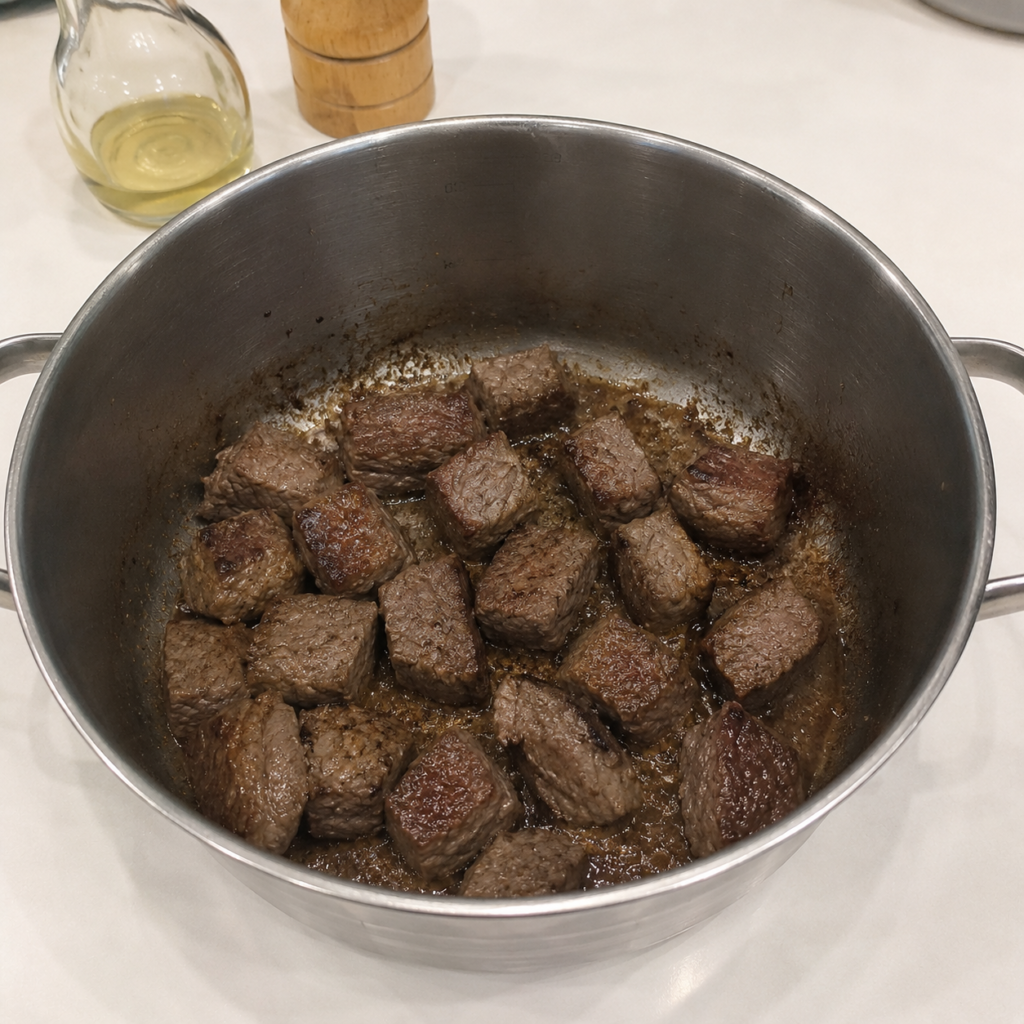
Proper browning is one of the most important steps because caramelization creates the deep flavor base of the stew.
Cook until the meat develops rich brown edges.
Remove temporarily and set aside.
The browned bits left in the pot contain enormous flavor.
3. Cook the Onions
Add sliced onions to the same pot.
Cook slowly over medium heat until softened and lightly golden.
The onions should become sweet and aromatic.
Add garlic and cook briefly.
Traditional Turkish stews rely heavily on onion sweetness to balance the richness of the meat.
4. Build the Sauce
Add tomato paste and cook for several minutes.
Cooking the tomato paste removes raw acidity and deepens flavor.
Add grated tomatoes, paprika, black pepper, and salt.
Stir thoroughly.
Return the beef to the pot.
Pour in hot water or beef stock.
Add bay leaves.
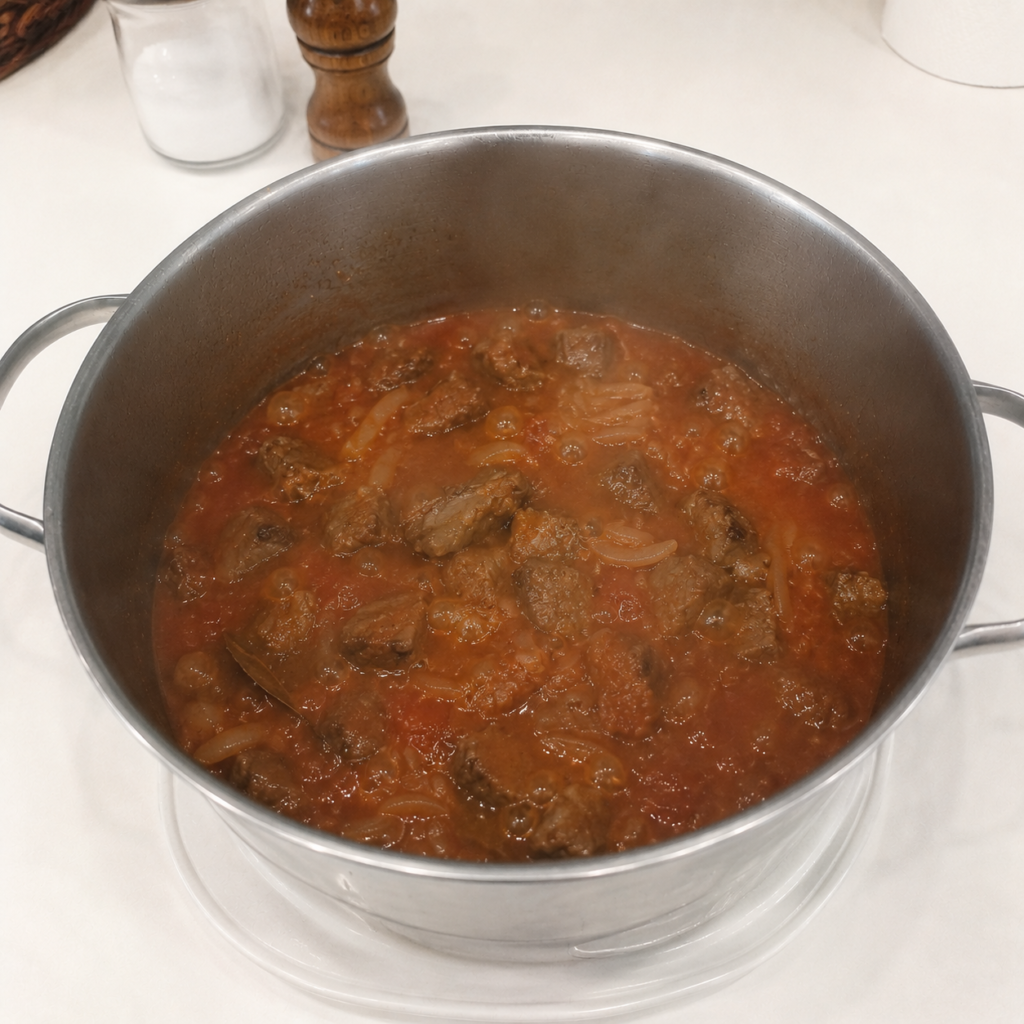
The liquid should partially cover the meat rather than completely drown it.
Tas Kebabı is meant to become rich and concentrated during cooking.
5. Simmer Slowly
Bring the stew to a gentle simmer.
Reduce heat to low.
Cover and cook slowly for about 1½ to 2 hours.
Slow cooking is essential because it allows:
- Connective tissue to soften
- Meat fibers to relax
- Sauce to deepen
- Flavors to combine
The beef should eventually become fork-tender.
Avoid rapid boiling.
Gentle simmering produces softer meat and smoother sauce.
6. Add Vegetables (Optional)
If using potatoes or carrots, add them during the final 30–40 minutes of cooking.
They should soften without falling apart.
Some regional variations include vegetables while others focus almost entirely on meat and sauce.
7. Adjust the Consistency
As the stew cooks, the sauce naturally thickens.
If the sauce becomes too thick, add a little hot water.
If it feels too thin, simmer uncovered briefly.
Proper Tas Kebabı sauce should feel:
- Rich
- Silky
- Glossy
- Spoon-coating
8. Serve the Tas Kebabı
Remove bay leaves before serving.
Serve hot over rice pilaf or alongside warm rustic bread.
Fresh parsley adds brightness and freshness.
Pickled vegetables help balance the richness of the stew.
The sauce should generously coat both the meat and rice.
What Makes Tas Kebabı So Special?
Tas Kebabı stands out because of patience and depth.
Unlike quick-cooked meat dishes, Tas Kebabı develops flavor slowly over time.
The long simmer transforms relatively simple ingredients into something deeply satisfying.
The dish succeeds through:
- Slow cooking
- Caramelization
- Onion sweetness
- Rich beef flavor
- Sauce concentration
Another defining feature is texture.
Proper Tas Kebabı should have:
- Fork-tender beef
- Velvety sauce
- Deep savory aroma
- Rich but balanced flavor
The sauce becomes especially important because it absorbs beef juices and caramelized flavors throughout cooking.
The Origins of Tas Kebabı
Tas Kebabı has roots in Ottoman palace and home cooking traditions.
The cooking method historically involved placing a metal bowl or weighted lid over the meat during cooking to trap moisture and improve tenderness.
Over time, the dish spread throughout Türkiye and became a staple of home kitchens and traditional restaurants.
Today, Tas Kebabı remains one of the country’s most recognizable stew dishes.
Choosing the Best Meat
Beef Chuck
Excellent marbling and connective tissue.
Ideal for long simmering.
Stewing Beef
Works very well if cooked slowly.
Avoid Lean Cuts
Lean meat can become dry and tough.
Things to Consider
Browning Is Critical
Proper caramelization builds flavor.
Cook Slowly
Fast boiling toughens meat.
Use Heavy Pots
Heavy pots distribute heat evenly.
Don’t Rush the Sauce
The sauce needs time to concentrate naturally.
Tips
Use Beef Stock for Deeper Flavor
Stock creates richer sauce than water.
Let the Stew Rest Briefly
Flavor improves slightly after resting.
Cook One Day Ahead
Tas Kebabı often tastes even better the next day.
Stir Occasionally
Prevents sticking during long simmering.
Use Fresh Bread
Perfect for soaking up the sauce.
Traditional Side Dishes
Tas Kebabı pairs beautifully with:
- Rice pilaf
- Pickled peppers
- Cacık
- Shepherd’s salad
- Rustic bread
- Fresh parsley
The lighter accompaniments help balance the richness of the stew.
Why Slow-Cooked Turkish Dishes Feel So Comforting
Many traditional Turkish dishes rely on slow cooking rather than aggressive seasoning.
The cuisine often emphasizes:
- Ingredient balance
- Natural sweetness
- Texture
- Gentle cooking
- Sauce richness
Tas Kebabı perfectly reflects this philosophy.
Its flavor feels deep and comforting without becoming overly heavy.
Storage and Reheating
Refrigerator
Store for up to 4 days.
Freezing
Freezes very well for several months.
Reheating
Reheat slowly over medium-low heat.
Add a splash of water if needed.
Final Thoughts
Tas Kebabı is one of the great comfort dishes of Turkish cuisine — rich, tender, deeply savory, and wonderfully satisfying.
Its slow-cooked beef, silky sauce, and caramelized flavors create the kind of meal that feels both rustic and luxurious at the same time.
Served with buttery rice pilaf and warm bread, Tas Kebabı becomes the type of traditional home-cooked dish that generations continue to return to for comfort and nostalgia.
It is Turkish slow cooking at its finest.
Afiyet olsun!