
 By Fatih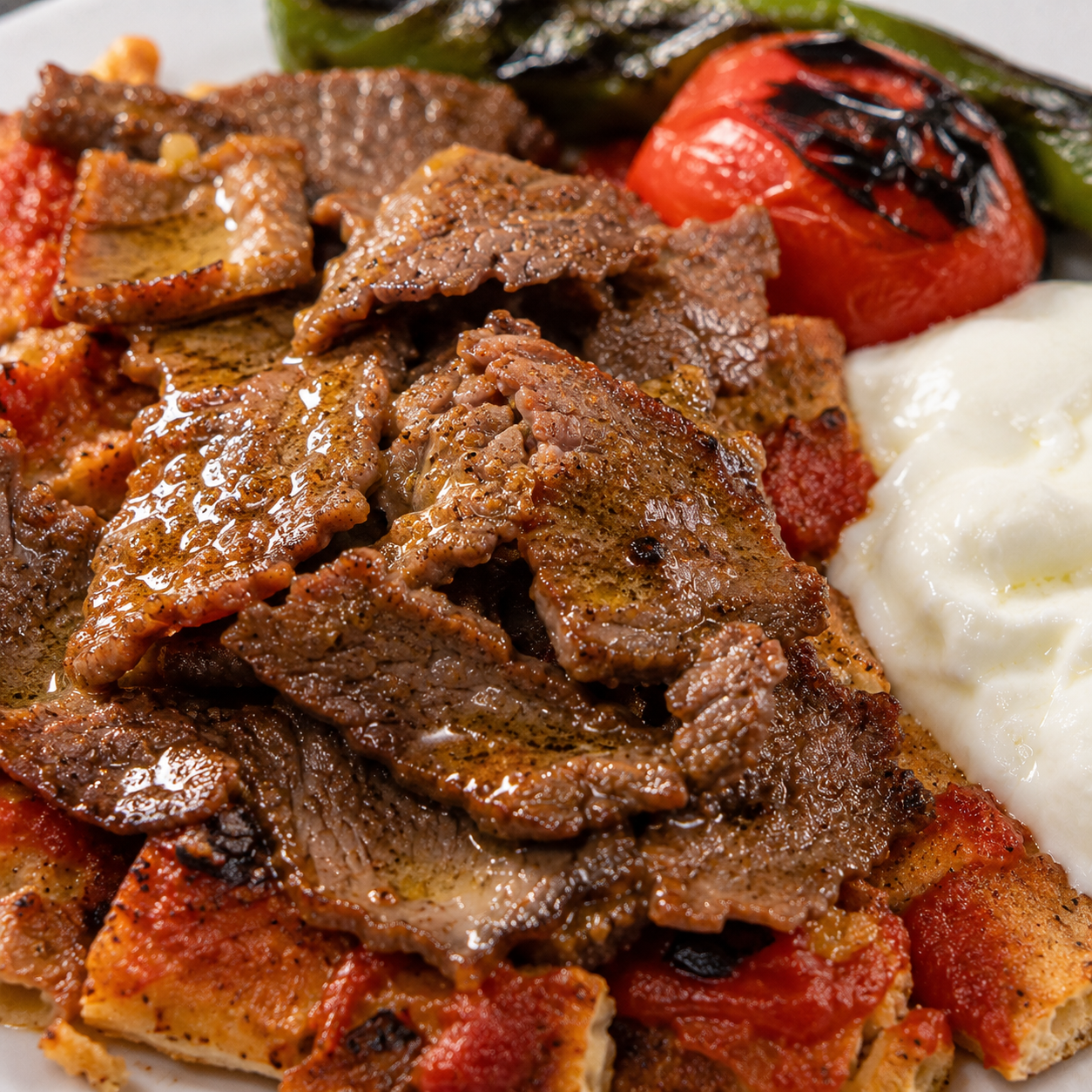
İskender Kebab is one of the most iconic dishes in Turkish cuisine — a luxurious combination of thinly sliced döner meat, toasted bread, rich tomato sauce, melted butter, and creamy yogurt.
Originating from the city of Bursa in northwestern Türkiye during the 19th century, İskender Kebab transformed traditional döner cooking into one of the country’s most beloved restaurant dishes.
The dish is named after İskender Efendi, who is credited with pioneering the vertical rotisserie method used for döner kebab.
This innovation allowed meat to roast evenly while continuously basting itself in rendered fat.
Over time, the serving style evolved into what we now know as İskender Kebab.
At first glance, the dish may seem simple.
But authentic İskender depends heavily on balance and technique.
Every component plays a critical role:
- Crispy bread absorbs juices
- Döner meat provides smoky richness
- Yogurt adds freshness
- Tomato sauce adds acidity
- Melted butter creates luxurious depth
The final result is deeply savory, buttery, tangy, creamy, and incredibly satisfying.
One of the defining features of İskender Kebab is the dramatic melted butter poured over the dish just before serving.
In many Turkish restaurants, the butter arrives sizzling hot and is poured tableside.
The aroma immediately fills the room.
Although authentic restaurant versions require vertical rotisserie equipment, home cooks can still recreate much of the experience using grilled meat, thinly sliced beef or lamb, or homemade oven döner techniques.
This recipe captures the essential spirit and flavor of authentic Bursa-style İskender Kebab in a home-friendly format.
- Servings: 4
- Prep Time: 40 minutes
- Cook Time: 30 minutes
- Total Time: About 1 hour 10 minutes
Ingredients
For the Meat
- 700 g beef sirloin, ribeye, or lamb, very thinly sliced
- 2 tablespoons olive oil
- 1 teaspoon paprika
- 1 teaspoon black pepper
- 1 teaspoon thyme
- 1 teaspoon cumin
- Salt, to taste
For the Tomato Sauce
- 1 tablespoon tomato paste
- 1 tablespoon butter
- 1 cup hot water
- 1 teaspoon paprika
- Salt and black pepper
For the Bread Base
- 2 Turkish pide breads or thick flatbread
- 1 tablespoon butter
For Serving
- 1½ cups Turkish yogurt
- 4 tablespoons melted butter
- Grilled green peppers
- Grilled tomatoes
- Fresh parsley
Instructions
1. Prepare the Meat
Slice the beef or lamb into extremely thin strips.
Traditional döner meat is shaved very thinly so it cooks rapidly while remaining tender.
If slicing at home feels difficult, partially freeze the meat for about 30–40 minutes first.
This firms the meat and makes thin slicing much easier.
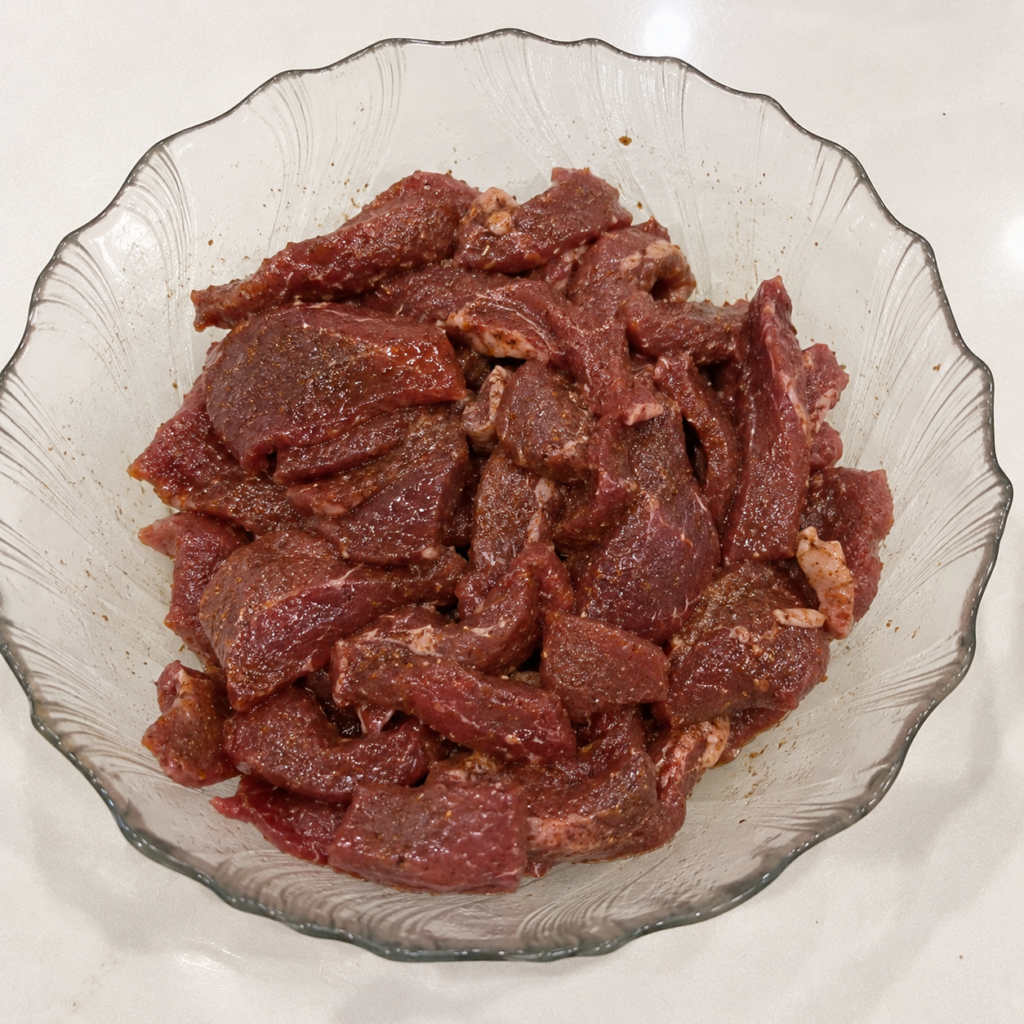
Place the sliced meat into a bowl.
Add olive oil, paprika, black pepper, thyme, cumin, and salt.
Mix thoroughly until evenly coated.
Allow the meat to rest for at least 20–30 minutes.
Traditional İskender preparation relies heavily on thin slicing and high-heat caramelization rather than heavy marinades.
2. Prepare the Bread Base
Cut the pide bread into bite-sized cubes.
Melt butter in a large pan.
Lightly toast the bread pieces until slightly crisp around the edges.
The bread should absorb sauce later without turning completely soggy.
Transfer the bread onto serving plates.
Traditional İskender uses soft Turkish pide bread that becomes saturated with tomato sauce, meat juices, and butter.
3. Prepare the Tomato Sauce
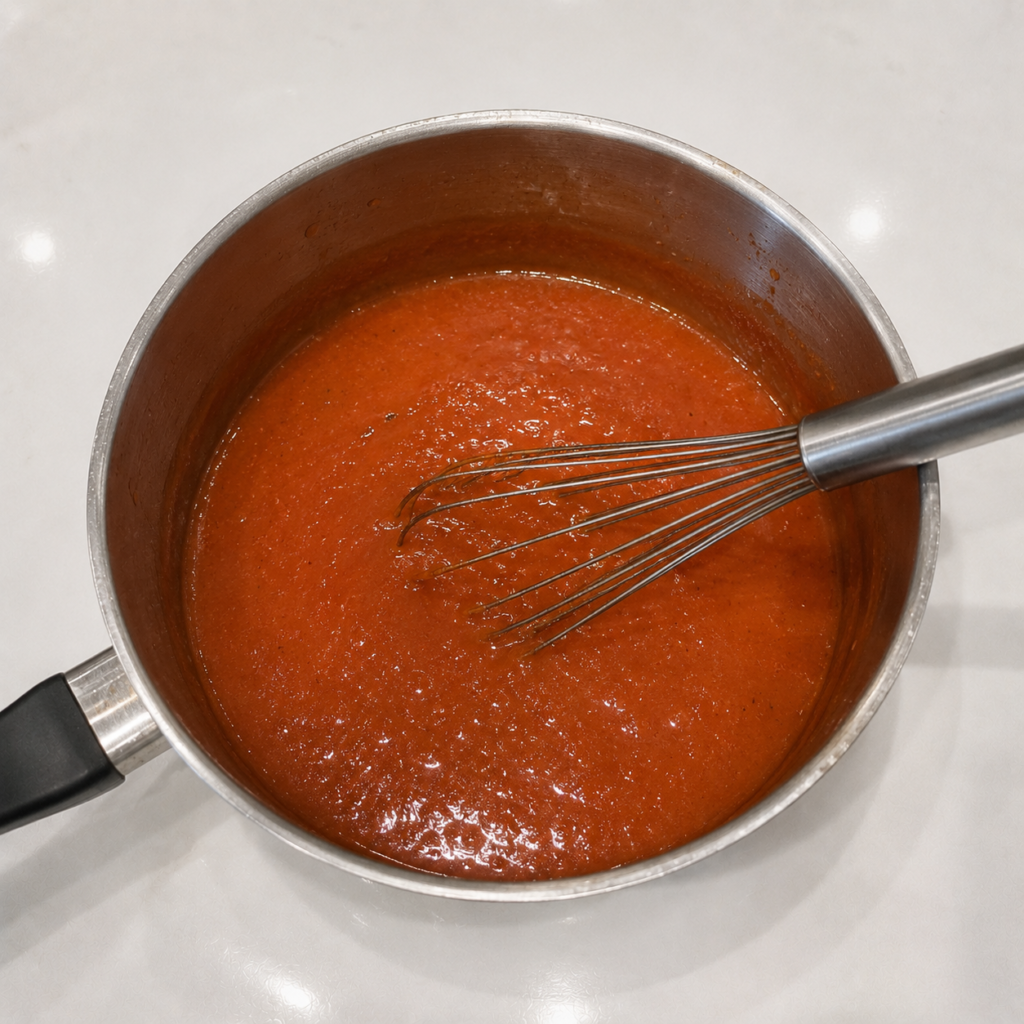
Melt butter in a saucepan.
Add tomato paste and paprika.
Cook briefly for about 1 minute.
Pour in hot water and whisk until smooth.
Season with salt and black pepper.
Simmer gently for several minutes.
The sauce should remain relatively thin and pourable.
Unlike thick pasta sauces, Turkish kebab sauces are designed to coat rather than dominate the meat.
4. Cook the Meat
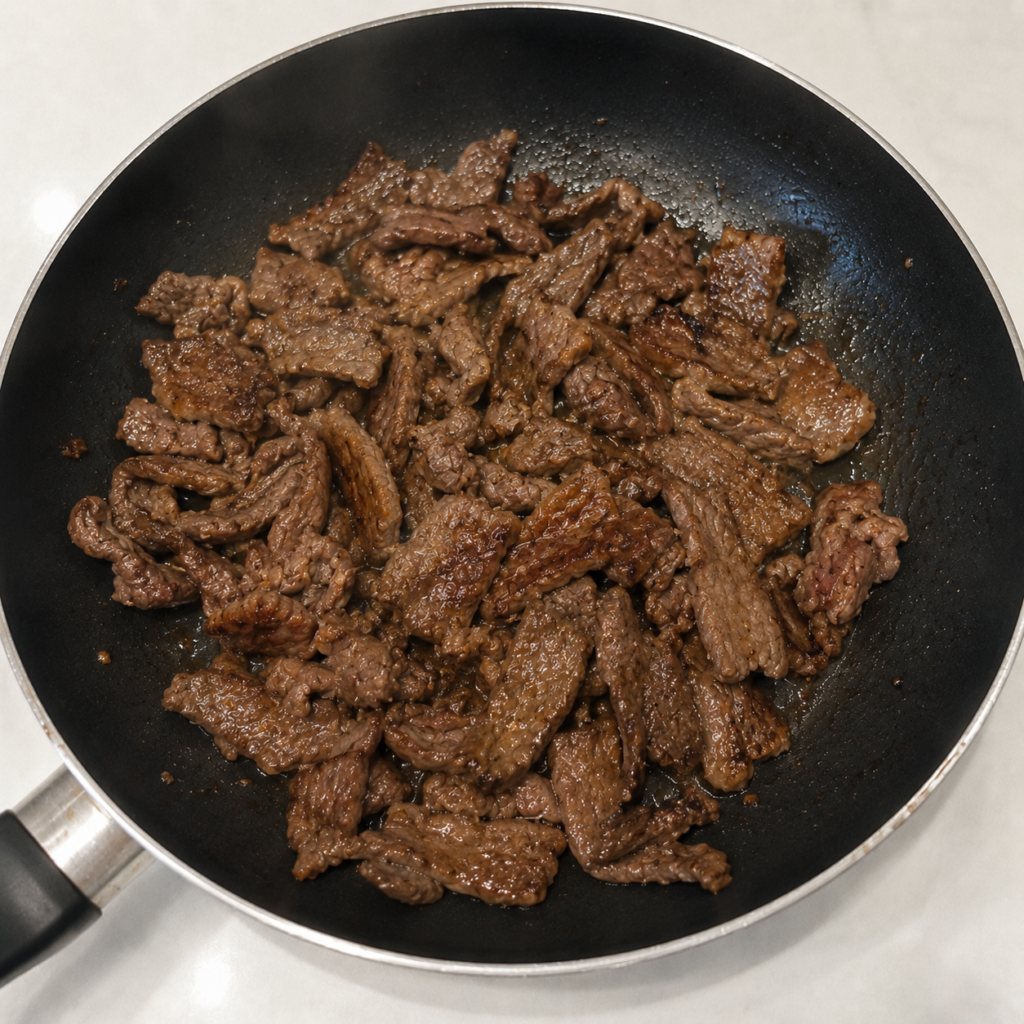
Heat a large skillet, cast-iron pan, or grill pan over very high heat.
The pan must be extremely hot before adding the meat.
Cook the meat quickly in batches.
Avoid overcrowding.
High heat allows the meat to caramelize while staying tender inside.
The edges should develop slight crispness similar to traditional döner meat shaved from a rotisserie.
Properly cooked İskender meat should be:
- Thin and tender
- Lightly crispy at edges
- Richly savory
- Slightly smoky
The rendered fat is extremely important for authenticity and flavor.
5. Warm the Yogurt
Some Turkish restaurants serve cold yogurt while others prefer room-temperature yogurt.
Place yogurt into a bowl and stir until smooth.
Avoid serving icy cold yogurt because it can cool the dish too aggressively.
Turkish yogurt is thicker and tangier than many international yogurts, making it especially suitable for kebab dishes.
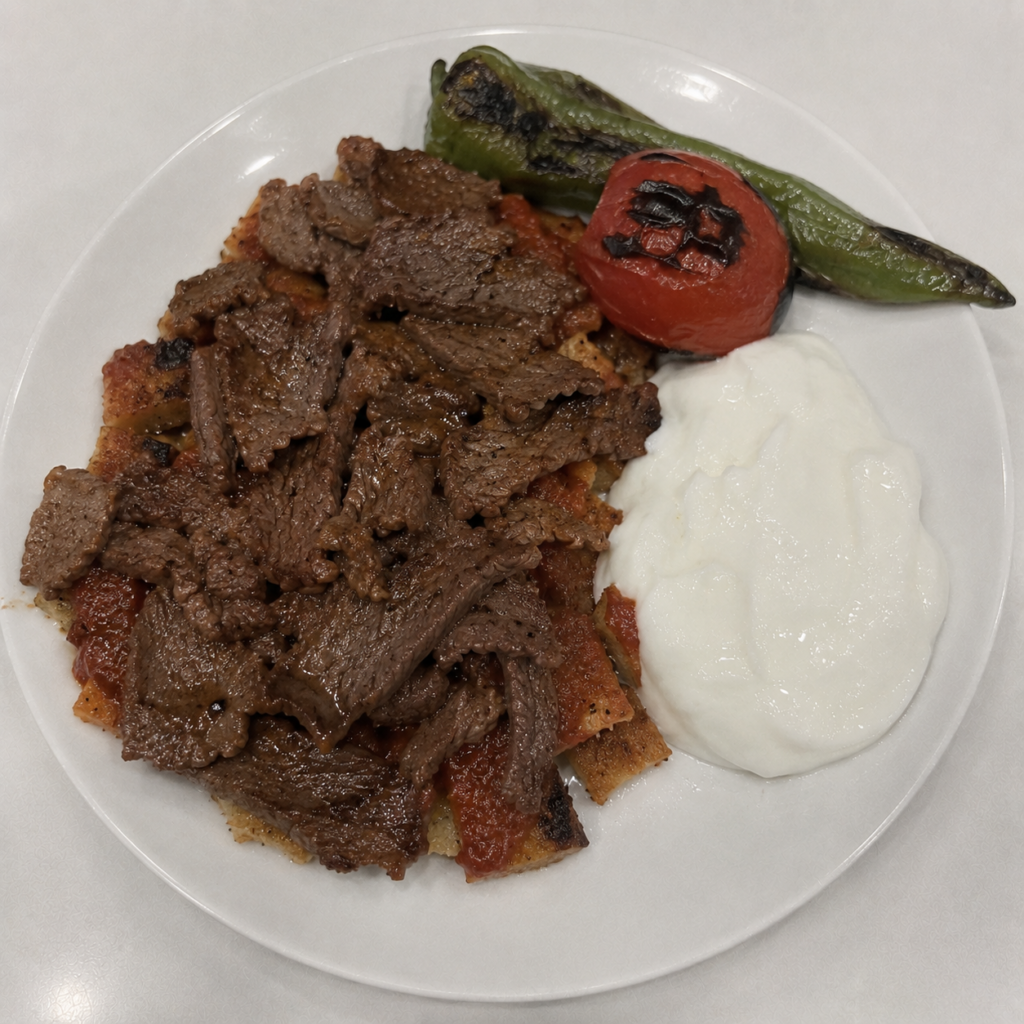
6. Assemble the Dish
This stage defines authentic İskender presentation.
Arrange toasted bread cubes on serving plates.
Spoon tomato sauce generously over the bread.
Add sliced cooked meat on top.
Place yogurt alongside the meat rather than directly covering everything.
This keeps the textures more balanced.
The bread underneath should begin soaking up the tomato sauce and meat juices immediately.
7. Finish with Melted Butter
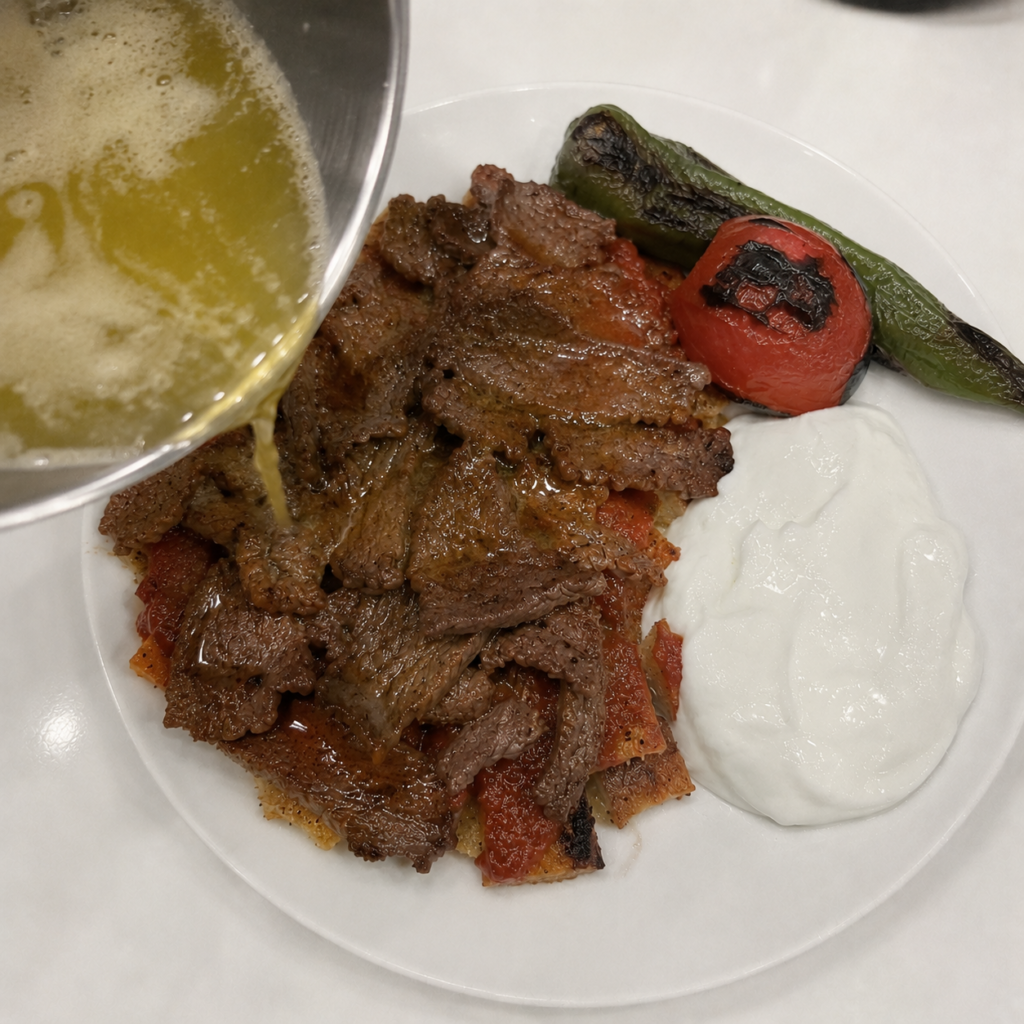
Melt butter until very hot.
Some Turkish restaurants cook the butter until lightly foamy.
Pour the sizzling butter directly over the meat before serving.
This final butter drizzle is one of the most iconic characteristics of İskender Kebab.
The aroma becomes deeply rich and irresistible.
8. Garnish and Serve
Serve immediately with:
- Grilled peppers
- Grilled tomatoes
- Fresh parsley
İskender Kebab is best eaten piping hot while the bread remains partly crisp and the butter stays aromatic.
Ayran is the traditional beverage pairing.
What Makes İskender Kebab So Special?
İskender Kebab succeeds because every component enhances another.
The bread absorbs sauce and meat juices.
The yogurt cools the richness.
The butter adds luxurious aroma.
The tomato sauce provides acidity and warmth.
The meat brings smokiness and depth.
The dish constantly shifts between creamy, crispy, buttery, tangy, and savory in every bite.
The bread is especially important.
Without the bread base, İskender loses much of its texture and identity.
The bread acts almost like a sponge, absorbing butter, tomato sauce, and rendered meat fat simultaneously.
Another defining characteristic is the balance.
Despite its richness, the dish rarely feels overwhelmingly heavy because yogurt and tomato provide freshness and acidity.
The Origins of İskender Kebab
İskender Kebab originated in Bursa during the Ottoman period.
The dish is closely associated with İskender Efendi, who helped popularize vertical rotisserie döner cooking in the late 19th century.
Bursa remains one of Türkiye’s most important döner cities today.
Many restaurants there continue using traditional charcoal cooking methods and carefully stacked meat layers.
Authentic Bursa-style İskender is often considered the gold standard throughout Türkiye.
Choosing the Best Meat
Ribeye
Excellent marbling and flavor.
Creates juicy, rich meat.
Sirloin
Lean but still flavorful.
Very common for home cooking.
Lamb
Traditional and deeply flavorful.
Especially authentic in many Turkish kebab houses.
Things to Consider
Slice the Meat Thinly
Thin slices create authentic döner texture.
High Heat Matters
The meat should sear rapidly rather than steam.
Don’t Skip the Butter
The melted butter defines the dish.
Use Thick Yogurt
Thin yogurt can water down the plate.
Tips
Partially Freeze the Meat
Makes slicing dramatically easier.
Toast the Bread Lightly
Bread should absorb sauce without disintegrating immediately.
Use Cast Iron
Cast iron creates better caramelization.
Warm Plates Before Serving
Helps maintain temperature longer.
Assemble Quickly
Serve immediately after adding butter.
Traditional Side Dishes
İskender Kebab pairs beautifully with:
- Ayran
- Pickled peppers
- Shepherd’s salad
- Roasted vegetables
- Ezme
- Sumac onions
These lighter sides balance the richness of the meat and butter.
Why Bursa Is Famous for Döner
Bursa has long been associated with Ottoman culinary culture and high-quality meat preparation.
The city’s historical importance, combined with livestock traditions and kebab culture, helped establish it as the birthplace of many famous meat dishes.
Today, Bursa remains a pilgrimage destination for kebab lovers throughout Türkiye.
Authentic İskender restaurants there often maintain cooking traditions passed down across generations.
Storage and Reheating
Refrigerator
Store meat, sauce, bread, and yogurt separately if possible.
Keeps for up to 3 days.
Reheating
Reheat meat quickly over high heat.
Warm sauce separately.
Toast fresh bread if possible.
Avoid Microwaving the Entire Dish
The bread can become overly soft and lose texture.
Final Thoughts
İskender Kebab is one of the greatest achievements of Turkish kebab culture — buttery, smoky, savory, creamy, and deeply comforting.
The combination of toasted bread, tender döner-style meat, tomato sauce, yogurt, and sizzling butter creates extraordinary flavor and texture in every bite.
Although rooted in Ottoman Bursa traditions, the dish remains timeless because of its simplicity and balance.
Every ingredient serves a clear purpose.
Served hot with grilled vegetables and fresh yogurt, İskender Kebab becomes the kind of unforgettable meal people crave long after finishing the plate.
It is rich without excess, comforting without heaviness, and one of the clearest examples of why Turkish cuisine is loved worldwide.
Afiyet olsun!