
 By Fatih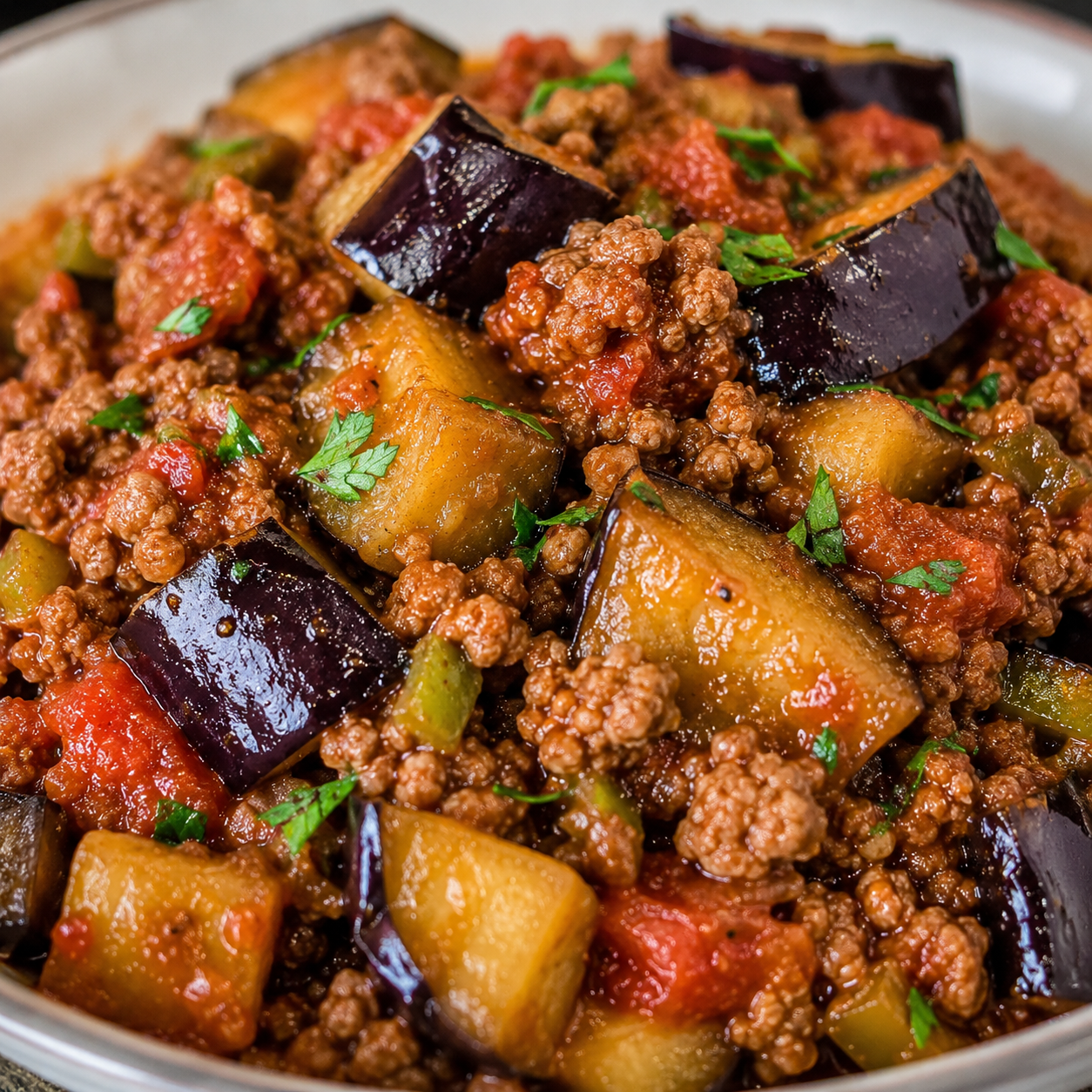
Turkish Moussaka, known in Türkiye as Patlıcan Musakka, is one of the most beloved eggplant dishes in Turkish home cooking. Tender fried eggplants are simmered together with savory minced meat, tomatoes, onions, garlic, and peppers until everything becomes deeply rich, soft, and incredibly flavorful.
Unlike the layered Greek-style moussaka topped with béchamel sauce, Turkish moussaka is lighter, simpler, and far more rustic. It is not built like a casserole. Instead, it is cooked more like a hearty stovetop eggplant stew where the vegetables and meat slowly absorb each other’s flavor.
The result is comforting, juicy, tomato-rich, and deeply aromatic without ever feeling overly heavy.
Eggplant plays a central role in Turkish cuisine, especially during summer months when fresh aubergines are abundant in markets across the country. Turkish cooks often pair eggplant with olive oil, tomatoes, peppers, and meat because these ingredients naturally balance one another beautifully.
In this dish, the eggplants become silky and creamy while soaking up the savory tomato sauce. The minced meat adds richness and depth, while garlic, onions, and peppers build layers of classic Turkish flavor.
Traditional Turkish musakka recipes usually rely on simple pantry ingredients rather than complicated techniques. That simplicity is exactly what makes the dish so satisfying. Similar Turkish-style eggplant dishes emphasize slow simmering and balance instead of heavy cream sauces or excessive cheese.
This recipe is perfect for cozy family dinners, meal prep, weekend cooking, or anyone wanting authentic Turkish comfort food at home.
Served alongside rice pilaf, bulgur pilaf, yogurt, or fresh bread, Turkish moussaka instantly becomes a complete and deeply satisfying meal.
One of the best things about this dish is how much flavor develops from relatively simple ingredients. As the eggplant cooks into the tomato sauce, everything transforms into a rich, savory, and beautifully balanced meal that tastes even better the next day.
- Servings: 4–6
- Prep Time: 30 minutes
- Cook Time: 45 minutes
- Total Time: About 1 hour 15 minutes
Ingredients
For the Eggplant
- 3 medium eggplants
- Salt
- Olive oil or vegetable oil for frying
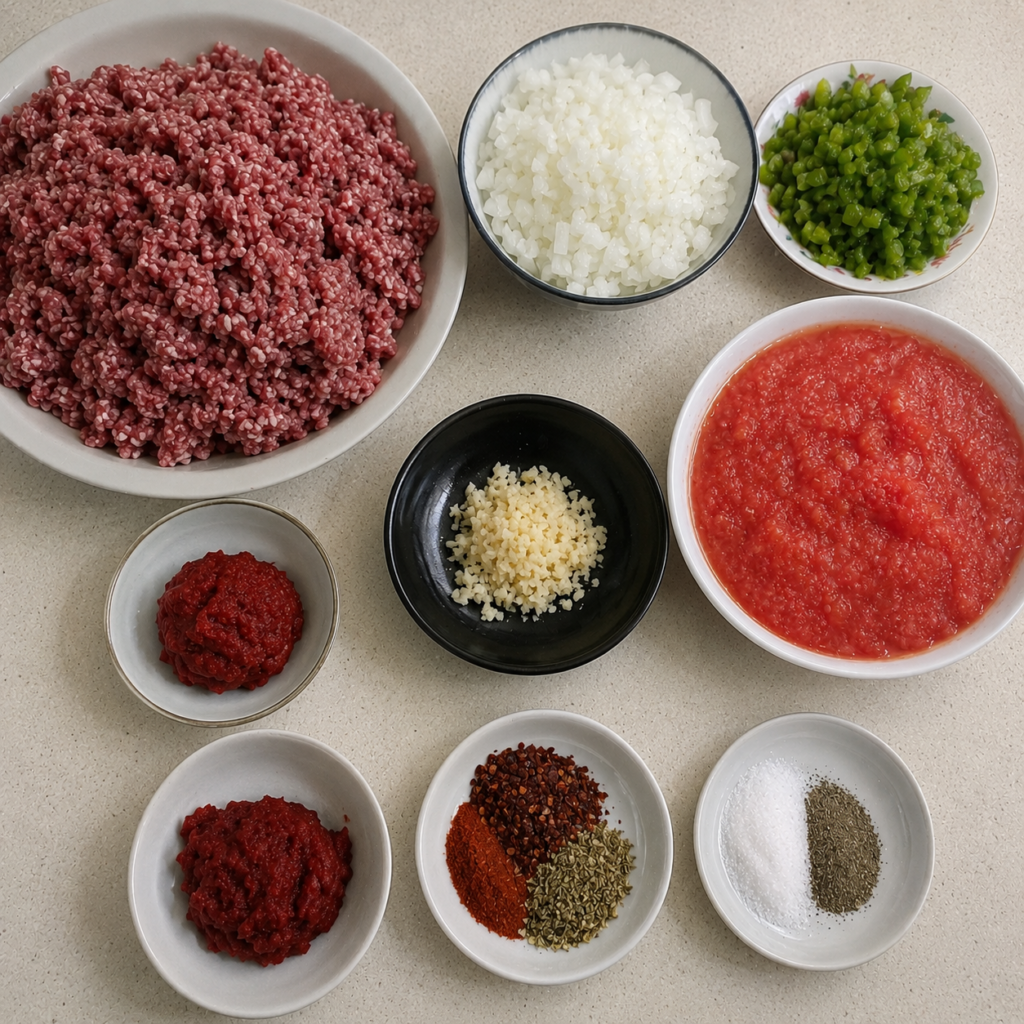
For the Meat Sauce
- 400 g ground beef or lamb
- 1 large onion, finely chopped
- 4 garlic cloves, minced
- 2 green Turkish peppers or 1 green bell pepper
- 2 tablespoons tomato paste
- 3 medium tomatoes, grated or finely chopped
- 1 tablespoon red pepper paste (optional)
- 1 teaspoon paprika
- 1 teaspoon pul biber (Aleppo pepper)
- Salt, to taste
- Freshly ground black pepper
- 2 tablespoons olive oil
- 1 small handful parsley, chopped
For Serving
- Rice pilaf
- Bulgur pilaf
- Yogurt or cacık
- Fresh bread
- Shepherd’s salad
Instructions
1. Prepare the Eggplants
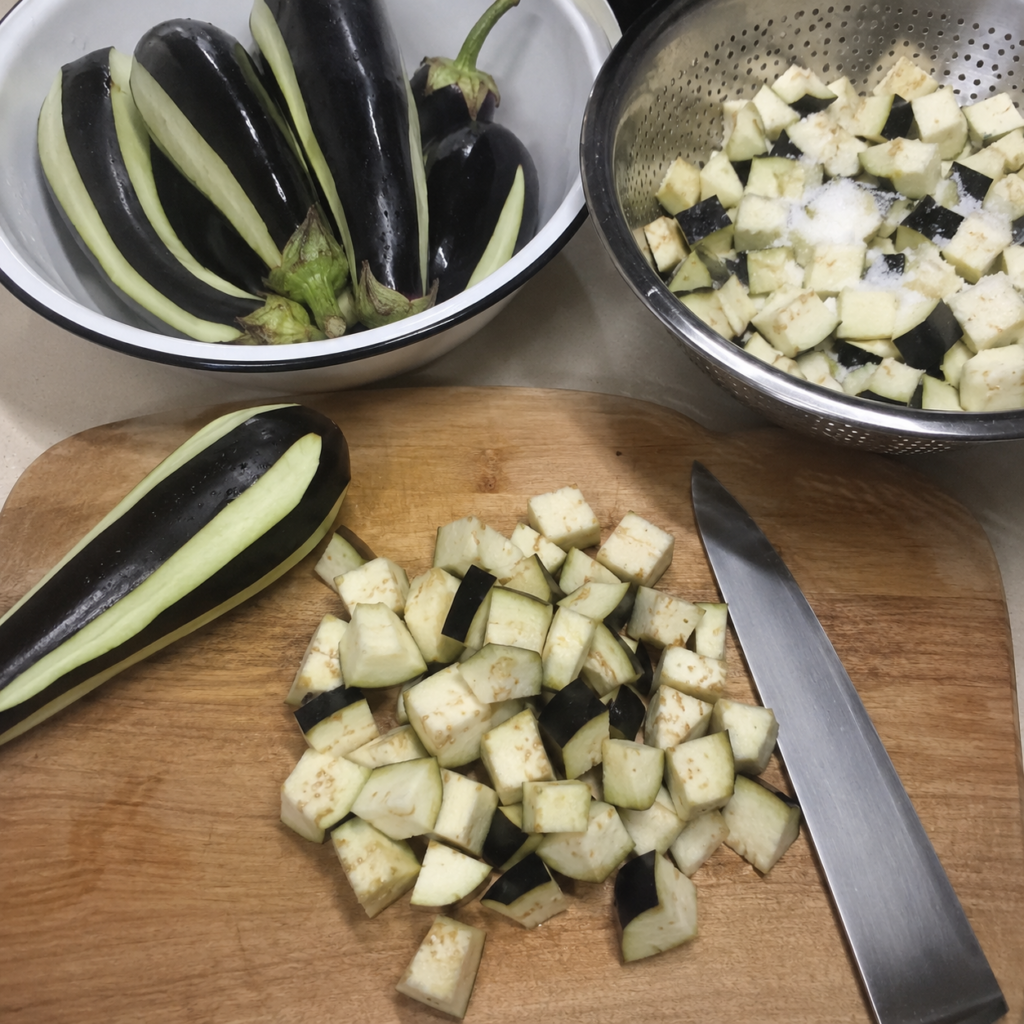
Partially peel the eggplants in striped patterns.
This traditional Turkish method helps the eggplants keep their structure while preventing the skin from becoming too tough after cooking.
Cut the eggplants into medium cubes or thick half-moons.
Place them into a large bowl and sprinkle generously with salt.
Allow them to sit for about 20–30 minutes.
Salting helps draw out excess moisture and bitterness from the eggplants while improving texture during frying.
After resting, rinse thoroughly and pat completely dry with paper towels.
2. Fry the Eggplants
Heat oil in a large frying pan over medium-high heat.
Fry the eggplant pieces in batches until lightly golden and softened.
Avoid overcrowding the pan because crowded eggplants absorb excess oil instead of browning properly.
Transfer the fried eggplants onto paper towels.
The eggplants should be soft and silky but still hold their shape.
Traditional Turkish musakka recipes typically fry the eggplants first because frying creates richer flavor and creamier texture compared to boiling or steaming.
3. Prepare the Meat Base
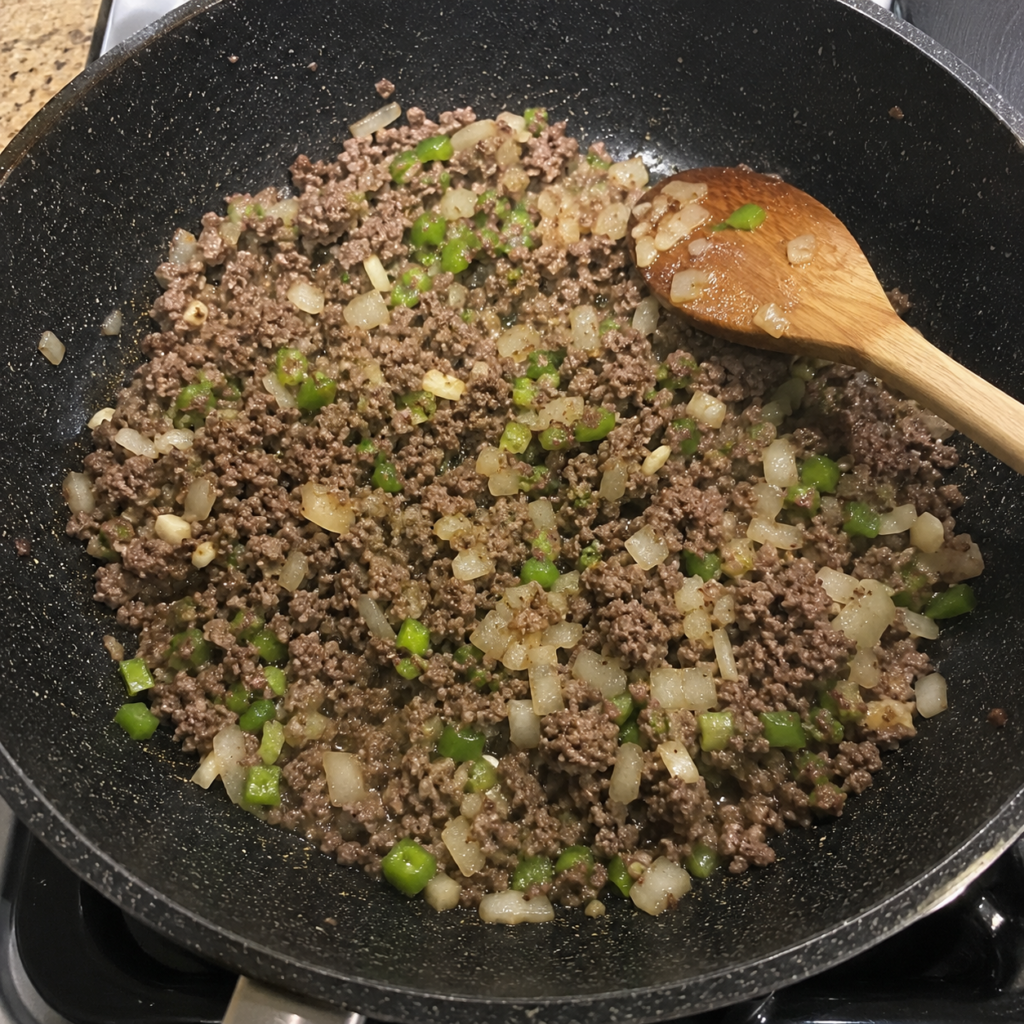
In a large wide pan or shallow pot, heat olive oil over medium heat.
Add the onions and cook until softened and translucent.
Stir in the green peppers and garlic.
Cook for another few minutes until fragrant.
Add the ground meat and cook until fully browned, breaking it apart with a wooden spoon.
The meat should develop light caramelization for deeper flavor.
4. Build the Sauce
Add tomato paste and red pepper paste to the pan.
Cook for about 1–2 minutes to remove the raw flavor and deepen the richness.
Stir in the grated tomatoes, paprika, pul biber, salt, and black pepper.
Allow the sauce to simmer gently for about 10 minutes.
The tomatoes should soften and the sauce should slightly thicken while remaining juicy.
Turkish cooking often uses tomato paste and pepper paste together because they create a deeper and more concentrated flavor profile.
5. Combine Everything
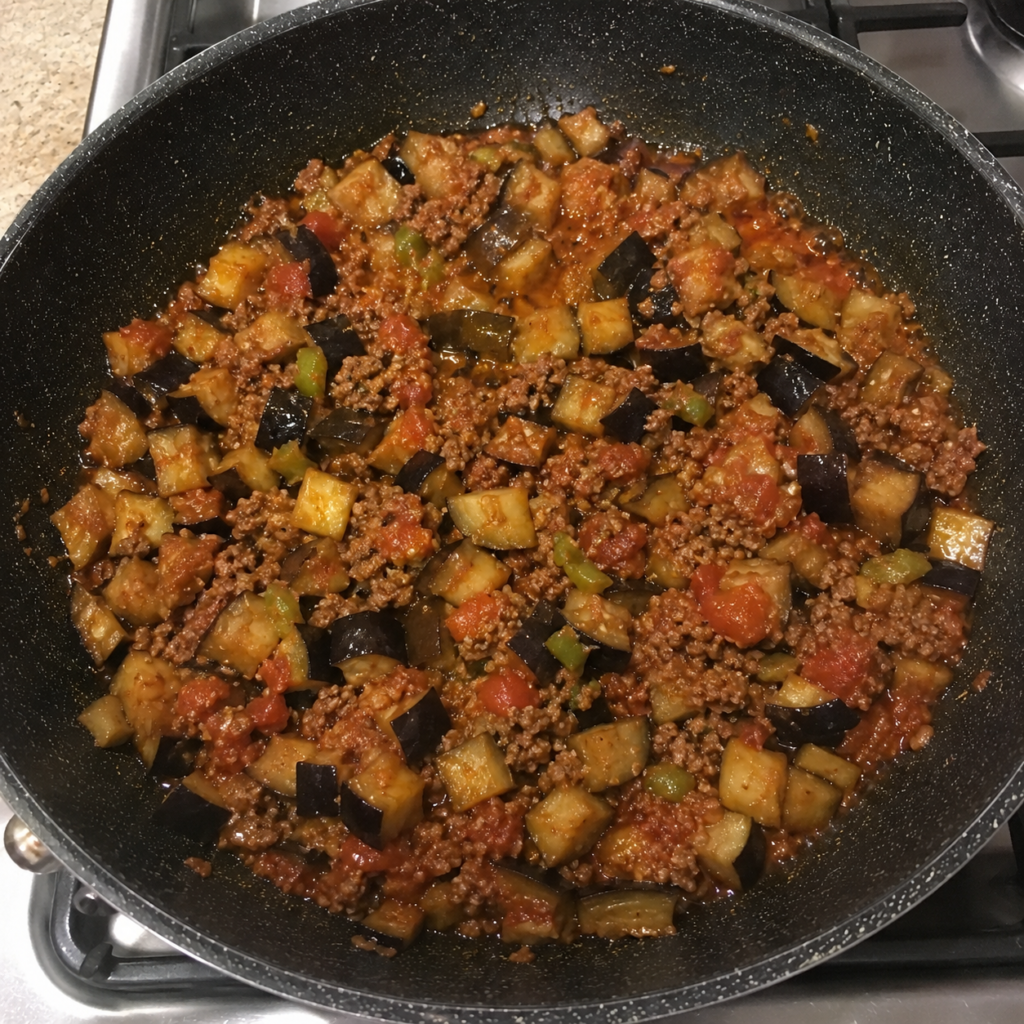
Add the fried eggplants into the meat sauce.
Stir very gently to avoid breaking the eggplants too much.
Reduce the heat and simmer everything together for another 10–15 minutes.
During this final simmer, the eggplants absorb the savory tomato sauce while becoming incredibly soft and flavorful.
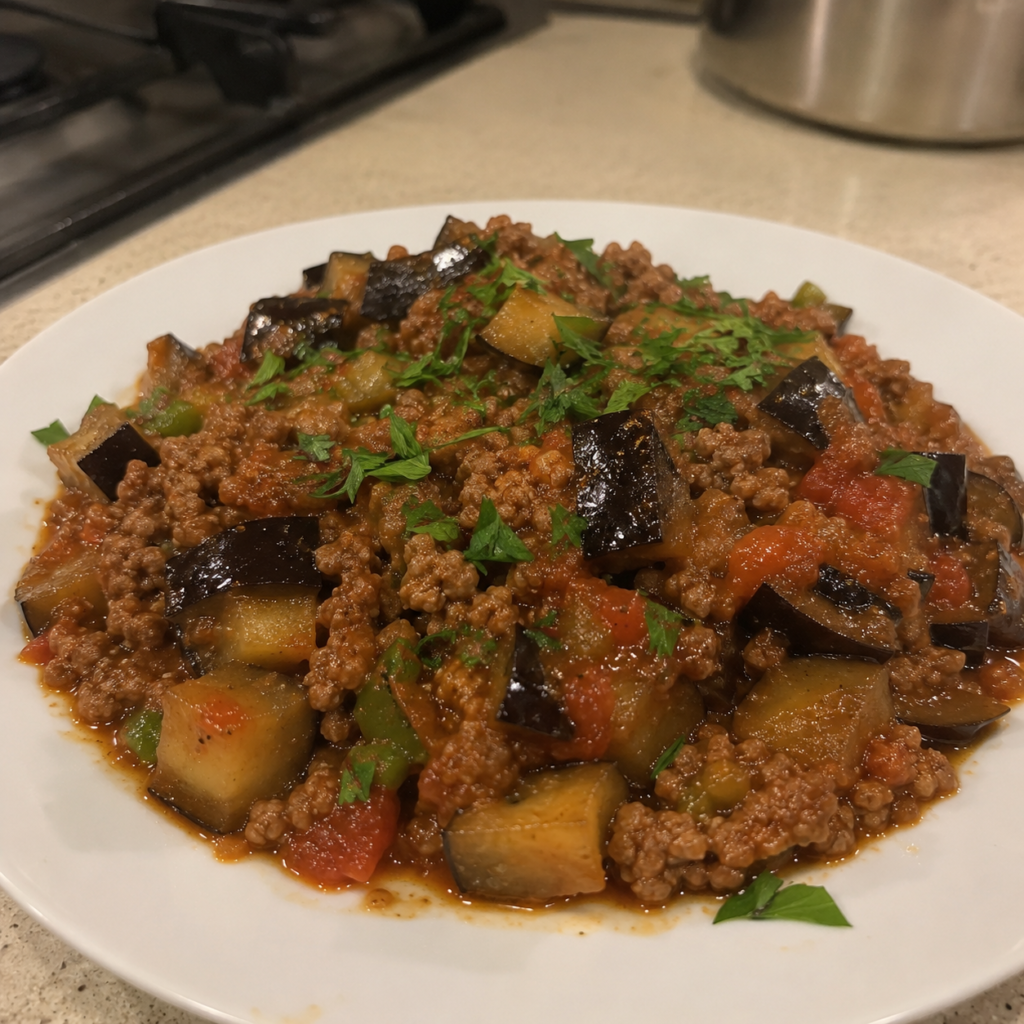
Finish with freshly chopped parsley.
The final consistency should be rich, soft, and slightly saucy rather than dry.
6. Serve
Serve hot with rice pilaf, bulgur pilaf, yogurt, or crusty bread.
A fresh Turkish shepherd’s salad pairs beautifully with the richness of the dish.
Some people also enjoy adding extra pul biber or a squeeze of lemon before serving.
Why Turkish Moussaka Works So Well
Eggplant naturally absorbs flavor exceptionally well.
When fried first, it develops silky texture and subtle caramelization that perfectly complements savory tomato sauce and meat.
Tomatoes bring brightness and acidity that balance the richness of both the meat and the fried eggplant.
Garlic, onions, and peppers create aromatic depth while Turkish spices add warmth without overpowering the dish.
Unlike heavier baked casseroles, Turkish musakka remains balanced and comforting while still feeling surprisingly light.
The stovetop cooking method allows all the ingredients to blend naturally into one cohesive dish full of layered flavor.
Understanding Turkish Musakka vs Greek Moussaka
Many people outside Türkiye associate moussaka primarily with the Greek version.
However, Turkish musakka is quite different.
Greek moussaka is usually layered with potatoes or eggplant and topped with thick béchamel sauce before baking.
Turkish musakka is simpler and more rustic.
It is typically cooked on the stovetop and focuses more on the natural harmony between eggplant, tomato sauce, and meat.
The Turkish version feels closer to everyday home cooking rather than a formal layered casserole.
Both versions are delicious, but they offer very different textures and experiences.
Choosing the Best Eggplants
Medium-Sized Eggplants Work Best
Smaller or medium-sized eggplants usually contain fewer seeds and less bitterness.
They also develop softer texture after frying.
Fresh Eggplants Matter
Choose eggplants that feel firm, glossy, and heavy for their size.
Wrinkled or soft eggplants may taste bitter or contain excess seeds.
Turkish Eggplants
Long, slender Turkish eggplants are ideal because they tend to have thinner skin and sweeter flavor.
However, Italian or globe eggplants also work very well.
Things to Consider
Frying Adds Flavor
While roasting can be used for a lighter version, frying creates the authentic silky texture most associated with traditional Turkish musakka.
Don’t Overcook the Eggplants
Eggplants continue softening while simmering in the sauce.
Over-frying them initially may cause them to completely fall apart later.
Lamb vs Beef
Ground lamb creates richer and more traditional flavor.
Ground beef produces a slightly lighter and more familiar taste.
A mixture of both works beautifully.
Tomato Quality Matters
Since tomato flavor plays a major role in the dish, ripe fresh tomatoes or high-quality canned tomatoes produce the best results.
Tips
Add Potatoes
Some Turkish families add fried potato cubes alongside the eggplants for extra heartiness.
Make It Spicier
Increase the amount of pul biber or add hot Turkish peppers for additional heat.
Use Fresh Herbs
Fresh parsley brightens the richness of the dish right before serving.
Fresh mint can also work beautifully alongside yogurt on the side.
Let It Rest
Like many tomato-based dishes, Turkish musakka tastes even better after resting for 15–20 minutes.
The flavors continue developing as it sits.
Serve with Rice
Rice pilaf absorbs the sauce beautifully and turns musakka into a complete comfort meal.
Storage and Reheating
Refrigerator
Store leftovers in an airtight container for up to 4 days.
Freezer
Freeze for up to 2 months.
Allow the dish to cool completely before freezing.
Reheating
Reheat gently on the stovetop over low heat or in the microwave.
Add a small splash of water if the sauce thickens too much during storage.
Musakka often tastes even richer the next day because the eggplants continue absorbing flavor overnight.
Turkish Side Dishes That Pair Beautifully
Turkish musakka works especially well with classic Turkish side dishes such as:
- Rice pilaf
- Bulgur pilaf
- Cacık
- Shepherd’s salad
- Sumac onions
- Fresh village bread
- Pickled vegetables
The freshness of these sides balances the richness of the eggplant and meat perfectly.
Mediterranean Comfort Food at Its Best
Turkish musakka reflects many classic Mediterranean cooking principles:
- Seasonal vegetables
- Olive oil
- Tomatoes
- Garlic
- Fresh herbs
- Slow simmering
- Balanced flavors
Rather than relying on heavy cream or cheese, the dish builds richness naturally through vegetables, meat, and careful cooking.
This creates food that feels deeply satisfying while still vibrant and fresh.
Final Thoughts
This Turkish Moussaka recipe is rich, comforting, rustic, and packed with authentic Turkish flavor. Soft silky eggplants, savory meat, tomatoes, garlic, and peppers come together to create one of the most beloved dishes in Turkish home cooking.
Every bite delivers warmth, richness, and Mediterranean depth without feeling overly heavy.
Whether served for a casual family dinner or prepared ahead for guests, Turkish musakka always feels comforting, satisfying, and deeply homemade.
Paired with rice, yogurt, and fresh salad, it becomes the kind of meal that brings everyone back to the table for seconds.
Afiyet olsun!