
 By Fatih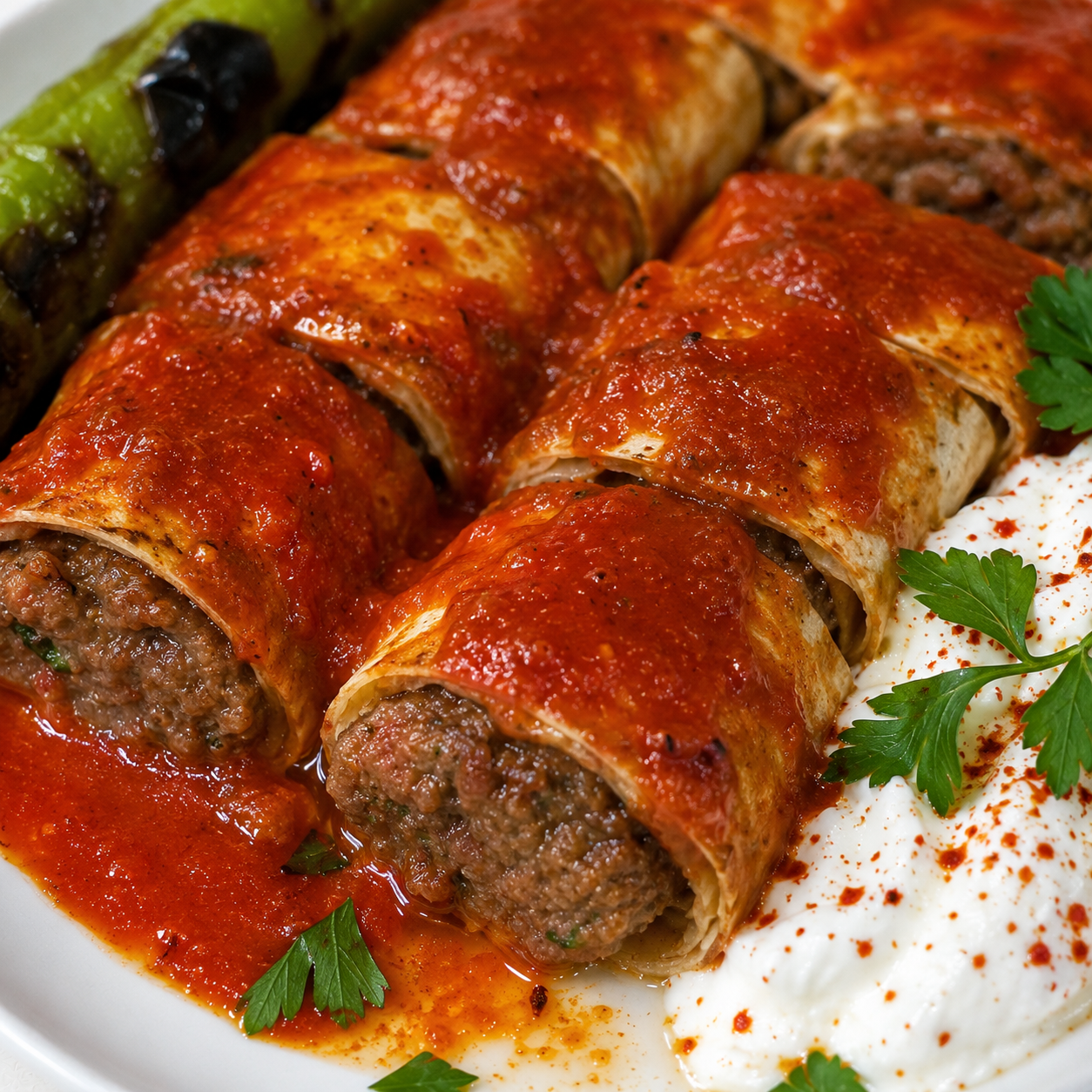
Beyti Kebab is one of the most elegant and recognizable dishes in Turkish restaurant cuisine. Juicy seasoned minced meat is shaped onto skewers, grilled until lightly charred, wrapped in thin lavash bread, sliced into bite-sized pieces, and finally topped with rich tomato sauce and creamy yogurt.
The result is smoky, buttery, savory, tangy, and incredibly satisfying.
Although many people assume Beyti Kebab is an ancient Ottoman recipe, the dish is actually relatively modern. It was created by famous Turkish restaurateur Beyti Güler in Istanbul during the 1960s and quickly became one of the most iconic kebab presentations in Türkiye.
The presentation is part of what makes Beyti so memorable.
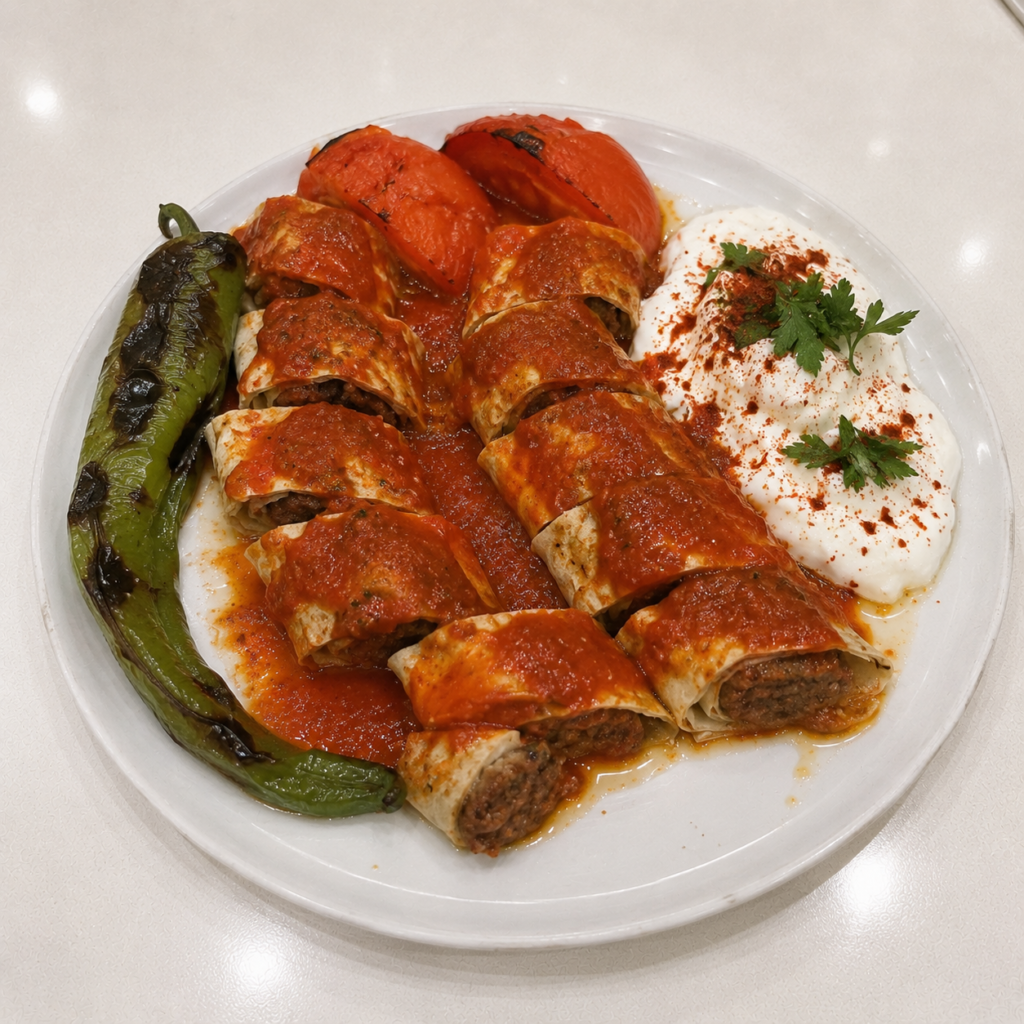
The sliced lavash rolls are arranged beautifully on a plate and drizzled with tomato sauce and melted butter, often served alongside grilled peppers and yogurt.
Visually, it feels elegant and restaurant-worthy.
But at its core, Beyti Kebab is still deeply comforting Turkish food.
The meat itself is usually made from lamb or a mixture of lamb and beef, seasoned simply with onion, garlic, spices, and parsley. The flavor relies heavily on proper grilling, rendered fat, and the smoky caramelization created over high heat.
Unlike heavier kebab dishes drowning in sauce or cheese, Beyti maintains balance.
The yogurt adds freshness.
The tomato sauce adds acidity and richness.
The lavash absorbs juices beautifully without becoming overwhelming.
One of the reasons Beyti Kebab became so popular throughout Türkiye is because it combines several beloved Turkish culinary traditions into one dish:
- Grilled kebab meat
- Fresh lavash bread
- Yogurt-based serving style
- Tomato-butter sauce
- Charcoal grilling culture
The final result feels luxurious without becoming complicated.
While restaurant versions are often cooked over charcoal using wide metal skewers, this home-friendly version recreates the same flavors using a grill pan, barbecue, or oven.
- Servings: 4–6
- Prep Time: 35 minutes
- Resting Time: 30 minutes
- Cook Time: 20 minutes
- Total Time: About 1 hour 30 minutes
Ingredients
For the Kebab Meat
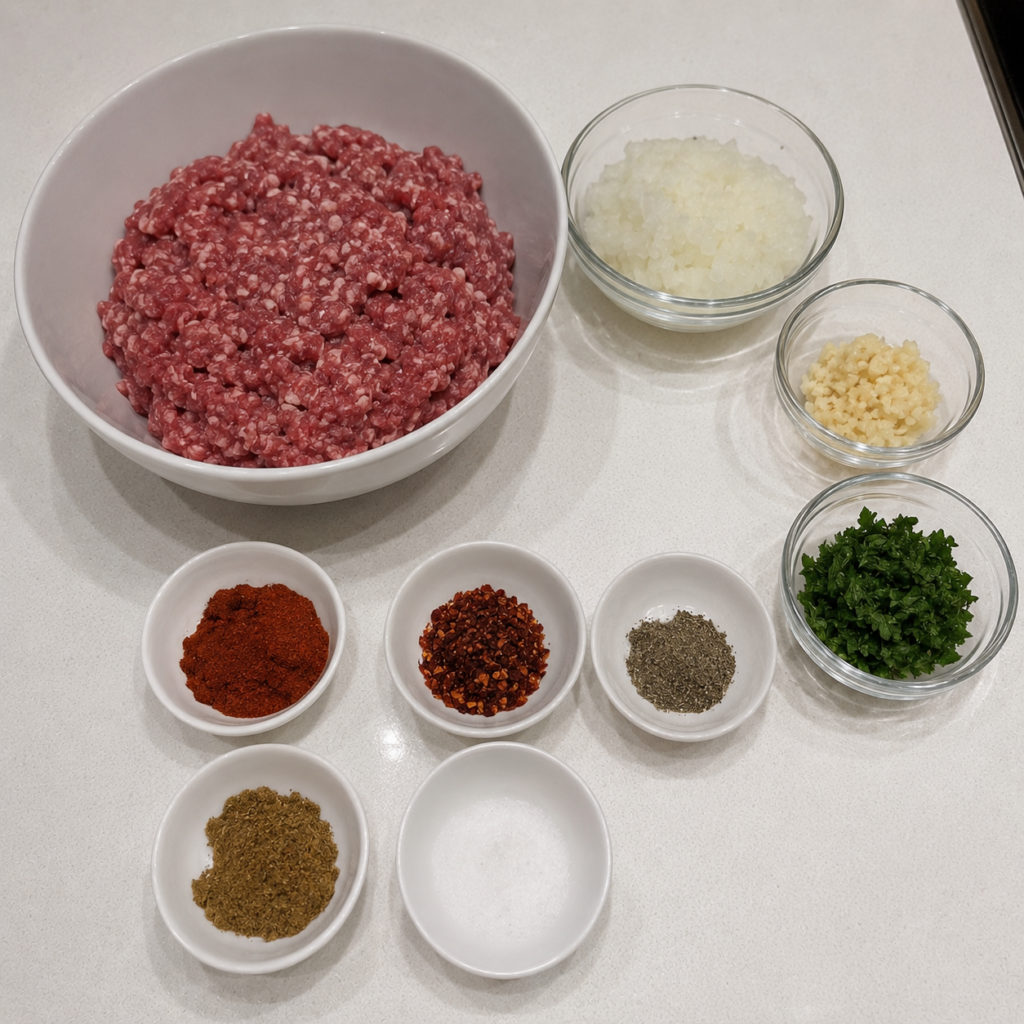
- 600 g ground lamb or beef-lamb mixture
- 1 small onion, grated
- 3 garlic cloves, minced
- 1 teaspoon paprika
- 1 teaspoon pul biber (Aleppo pepper)
- 1 teaspoon cumin
- 1 teaspoon black pepper
- 1½ teaspoons salt
- 2 tablespoons parsley, finely chopped
For the Lavash Wrap
- 2 large lavash breads or thin flatbreads
- 2 tablespoons melted butter
For the Tomato Sauce
- 1 tablespoon tomato paste
- 1 tablespoon butter
- 1 cup hot water
- Salt and black pepper
For Serving
- 1 cup Turkish yogurt
- Grilled green peppers
- Grilled tomatoes
- Melted butter for drizzling
- Fresh parsley
Instructions
1. Prepare the Meat Mixture
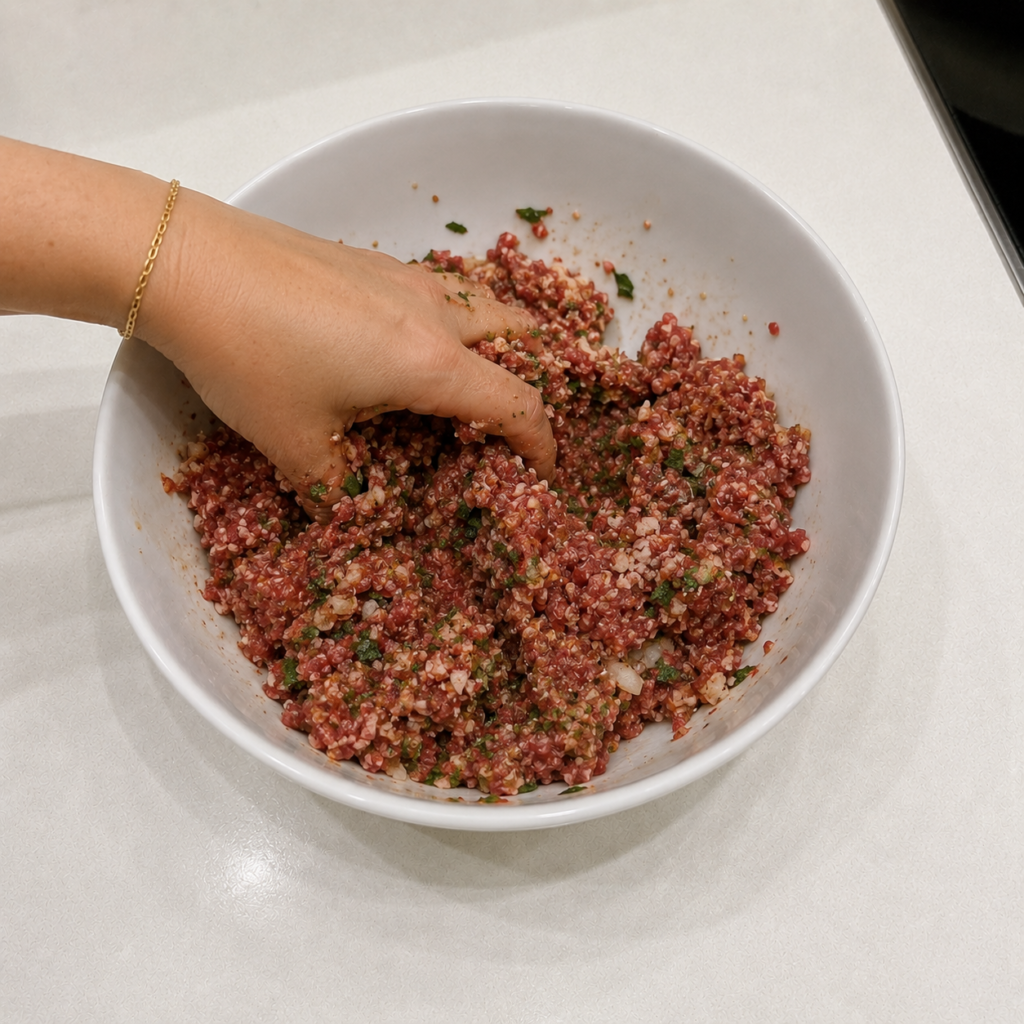
Place the ground meat into a large bowl.
Add grated onion, garlic, paprika, pul biber, cumin, black pepper, salt, and parsley.
Mix thoroughly using your hands for several minutes.
The mixture should become sticky and cohesive.
This step is extremely important because proper mixing develops protein structure that helps the kebabs hold together during cooking.
Traditional Turkish kebab masters often knead kebab mixtures extensively to achieve the correct texture.
Cover and refrigerate for at least 30 minutes.
This resting time allows the flavors to develop while helping the mixture firm slightly.
2. Shape the Kebabs
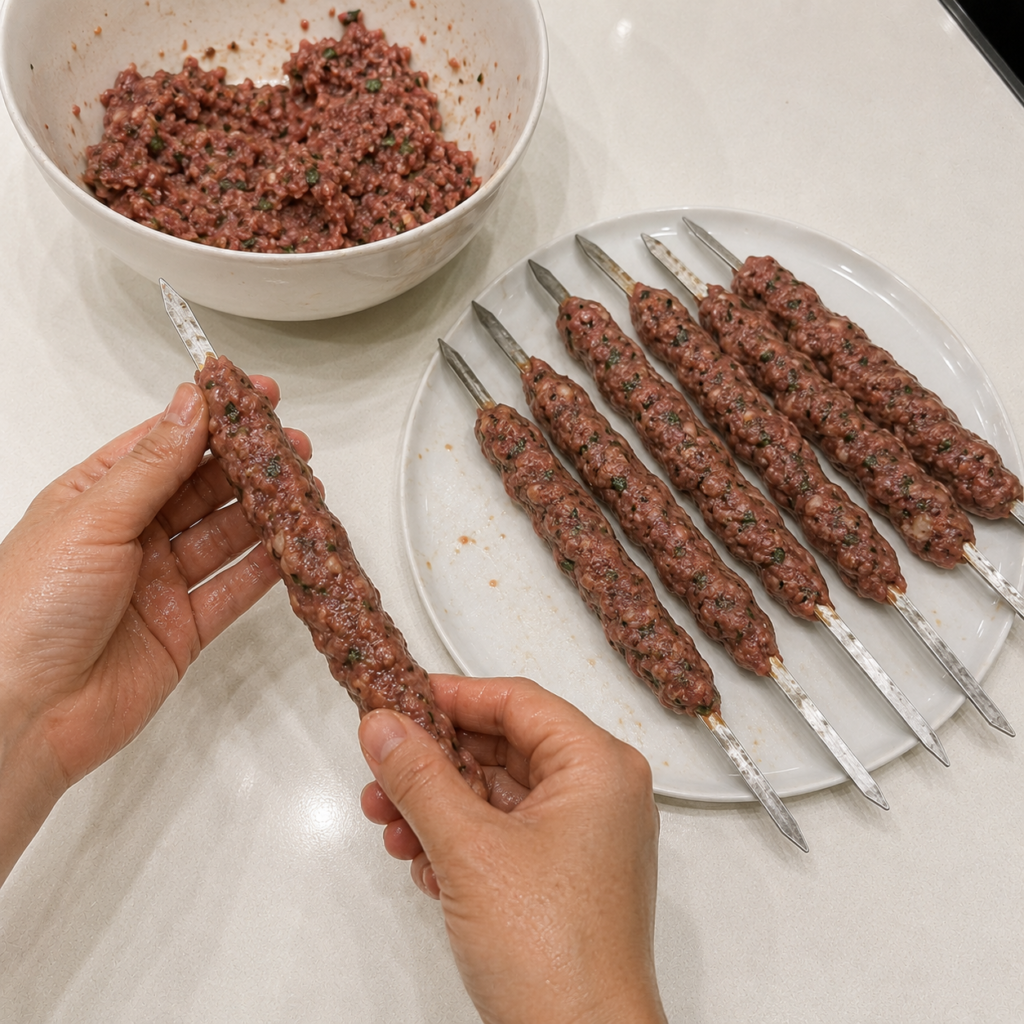
Divide the meat mixture into equal portions.
Shape onto metal skewers into long sausage-like kebabs.
If you do not have skewers, shape the meat into elongated logs by hand.
Traditional Beyti Kebab usually uses flatter kebab shapes similar to Adana-style kebabs.
Wet hands lightly with water while shaping to prevent sticking.
3. Grill the Kebabs
Charcoal Grill Method
Cook over medium-high charcoal heat until nicely browned and lightly charred.
Rotate frequently for even cooking.
Grill Pan Method
Cook over medium-high heat with a lightly oiled grill pan.
Oven Method
Bake at 220°C (425°F) for about 15–18 minutes, turning once halfway through cooking.
The kebabs should remain juicy inside while developing caramelized edges outside.
Properly cooked Beyti kebab should have:
- Light smokiness
- Crispy edges
- Juicy center
- Deep savory aroma
The rendered fat plays a huge role in flavor development during grilling.
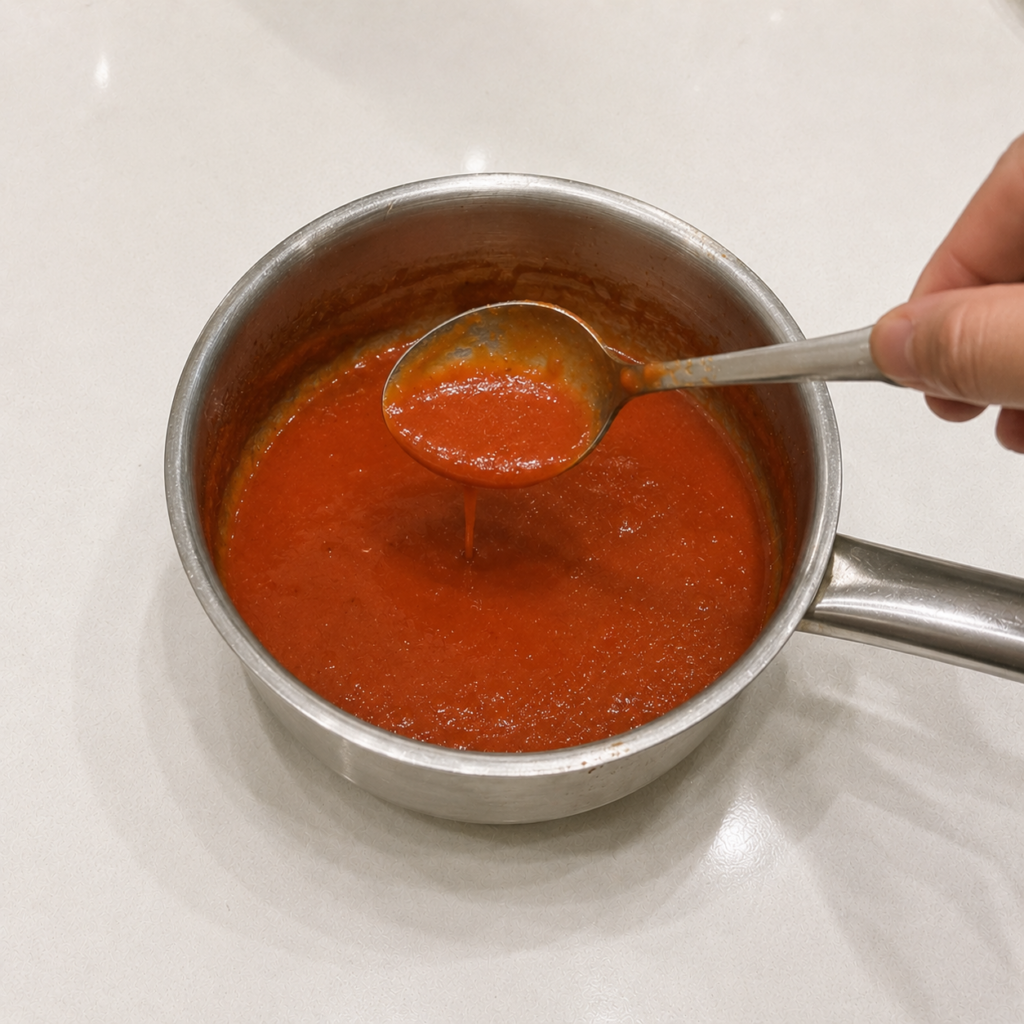
4. Prepare the Tomato Sauce
Melt butter in a small saucepan.
Add tomato paste and cook for about 1 minute.
Pour in hot water and whisk until smooth.
Season with salt and black pepper.
Simmer gently for several minutes until slightly thickened.
The sauce should remain pourable rather than overly heavy.
Turkish kebab sauces are usually relatively light because the grilled meat itself remains the main focus.
5. Prepare the Lavash
Warm the lavash bread briefly.
Brush lightly with melted butter.
This step softens the bread and improves flavor dramatically.
Traditional Turkish restaurants often lightly warm lavash directly over grill heat before wrapping.
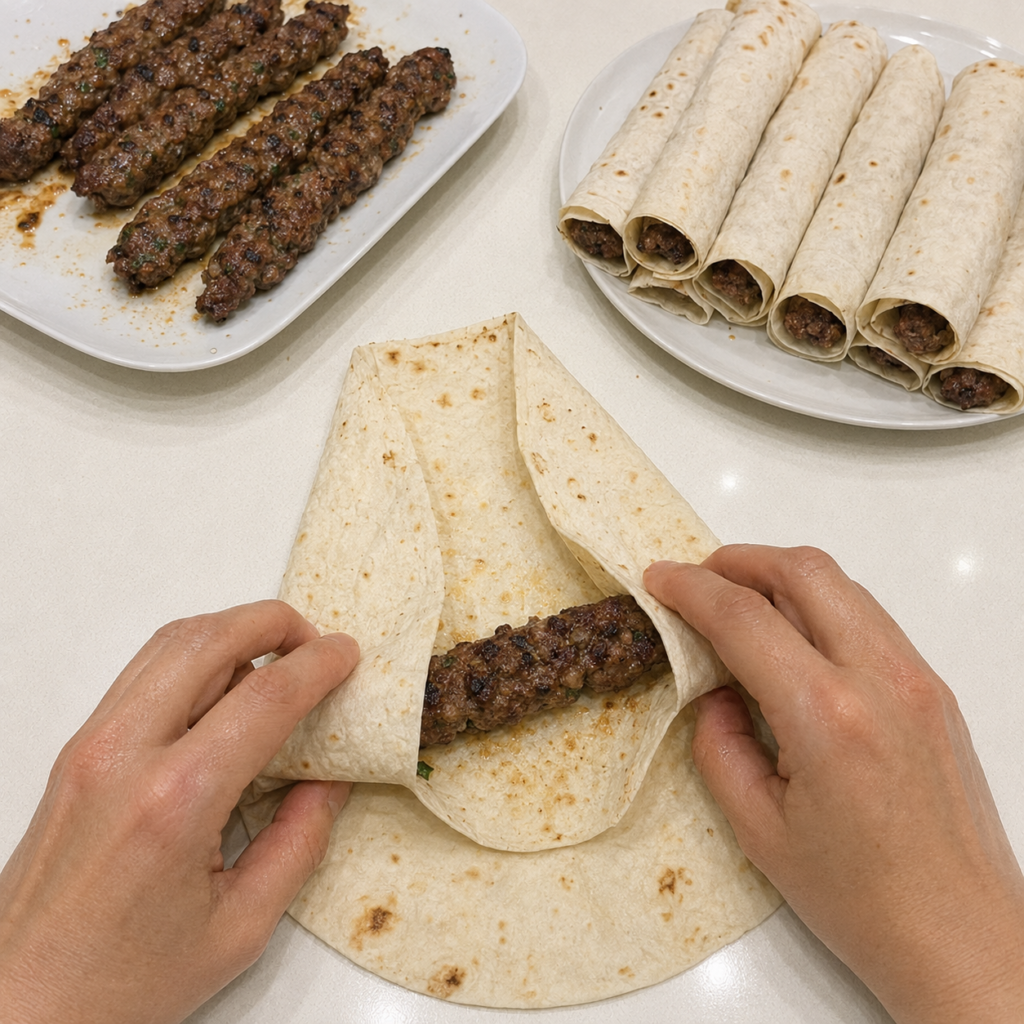
6. Wrap the Kebabs
Place cooked kebabs onto the lavash.
Roll tightly.
The bread absorbs the meat juices and rendered fat beautifully during this stage.
Slice the wrapped rolls diagonally into bite-sized pieces.
Arrange neatly on serving plates.
This distinctive sliced presentation is one of Beyti Kebab’s defining characteristics.
7. Finish the Dish
Spoon tomato sauce over the sliced wraps.
Add generous dollops of yogurt alongside.
Drizzle with melted butter.
Top with parsley if desired.
Serve immediately while hot.
Grilled tomatoes and peppers are traditional accompaniments.
What Makes Beyti Kebab So Special?
Beyti Kebab succeeds because it balances several contrasting textures and flavors perfectly.
The grilled meat is smoky and savory.
The lavash becomes soft and buttery.
The yogurt cools and refreshes.
The tomato sauce adds acidity and richness.
Together, every bite feels balanced rather than heavy.
The sliced presentation also changes the eating experience significantly compared to standard kebab wraps.
Instead of becoming a handheld sandwich, Beyti transforms into a plated restaurant-style dish that feels more refined and elegant.
The light char from grilling is especially important because it creates complexity without requiring complicated seasoning.
Authentic Turkish kebab culture often depends more on fire and meat quality than excessive spice blends.
The Origins of Beyti Kebab
The dish is named after Beyti Güler, founder of the famous Beyti Restaurant in Istanbul.
Inspired partly by Middle Eastern grilling traditions, Beyti Güler developed this wrapped and sliced kebab presentation into one of Türkiye’s most famous restaurant dishes.
Over time, countless Turkish restaurants adopted their own variations.
Today, Beyti Kebab appears throughout Türkiye and internationally in Turkish restaurants around the world.
Choosing the Best Meat
Lamb
Traditional and richer in flavor.
Lamb creates deeper authenticity and juicier texture.
Beef-Lamb Mixture
Very common in modern restaurants.
Balances richness and lighter flavor.
Fat Content Matters
Avoid overly lean meat.
Some fat is essential for juicy kebabs.
Things to Consider
Don’t Overwork the Meat
Mix thoroughly but avoid turning the texture rubbery.
Grill Heat Matters
Strong heat creates caramelization and smoky flavor.
Lavash Should Stay Soft
Do not over-toast the bread.
Soft flexible lavash wraps more easily.
Yogurt Is Essential
The yogurt balances the richness of the meat and butter.
Tips
Use Metal Skewers
Metal conducts heat better and helps the kebabs cook evenly.
Add Charcoal Flavor
Even small amounts of charcoal smoke dramatically improve authenticity.
Warm Plates Before Serving
Warm plates help maintain temperature and texture.
Use Turkish Yogurt
Thicker yogurt creates more authentic texture and flavor.
Serve Immediately
Beyti is best eaten fresh while the bread remains soft and warm.
Traditional Side Dishes
Beyti Kebab pairs beautifully with:
- Ayran
- Sumac onions
- Shepherd’s salad
- Ezme
- Grilled peppers
- Pickled vegetables
These sides help balance the richness of the kebab and butter sauce.
Why Turkish Kebab Culture Feels Unique
Turkish kebab culture focuses heavily on balance and simplicity.
Rather than overwhelming meat with heavy sauces, Turkish grilling traditions emphasize:
- Fire
- Smoke
- Fat rendering
- Fresh bread
- Yogurt
- Light seasoning
Beyti Kebab perfectly reflects this philosophy.
The dish feels rich but never overwhelming because every component balances another.
This harmony is one of the defining characteristics of Turkish cuisine overall.
Storage and Reheating
Refrigerator
Store leftovers in an airtight container for up to 3 days.
Freezer
Freeze cooked kebabs separately from bread and sauce.
Reheating
Reheat gently in a skillet or oven.
Avoid microwaving if possible because it softens the grilled texture.
Final Thoughts
Beyti Kebab is one of Türkiye’s most iconic restaurant dishes for good reason.
The combination of smoky grilled meat, buttery lavash, creamy yogurt, and light tomato sauce creates incredible balance in every bite.
Its elegant sliced presentation makes it feel special enough for entertaining while still remaining deeply comforting and approachable.
Whether grilled outdoors over charcoal or prepared indoors using a grill pan, Beyti Kebab delivers authentic Turkish flavor with rich texture and unforgettable aroma.
Served hot with yogurt, grilled vegetables, and warm bread, it becomes the kind of dish people immediately associate with Turkish hospitality and kebab culture.
Afiyet olsun!