
 By Fatih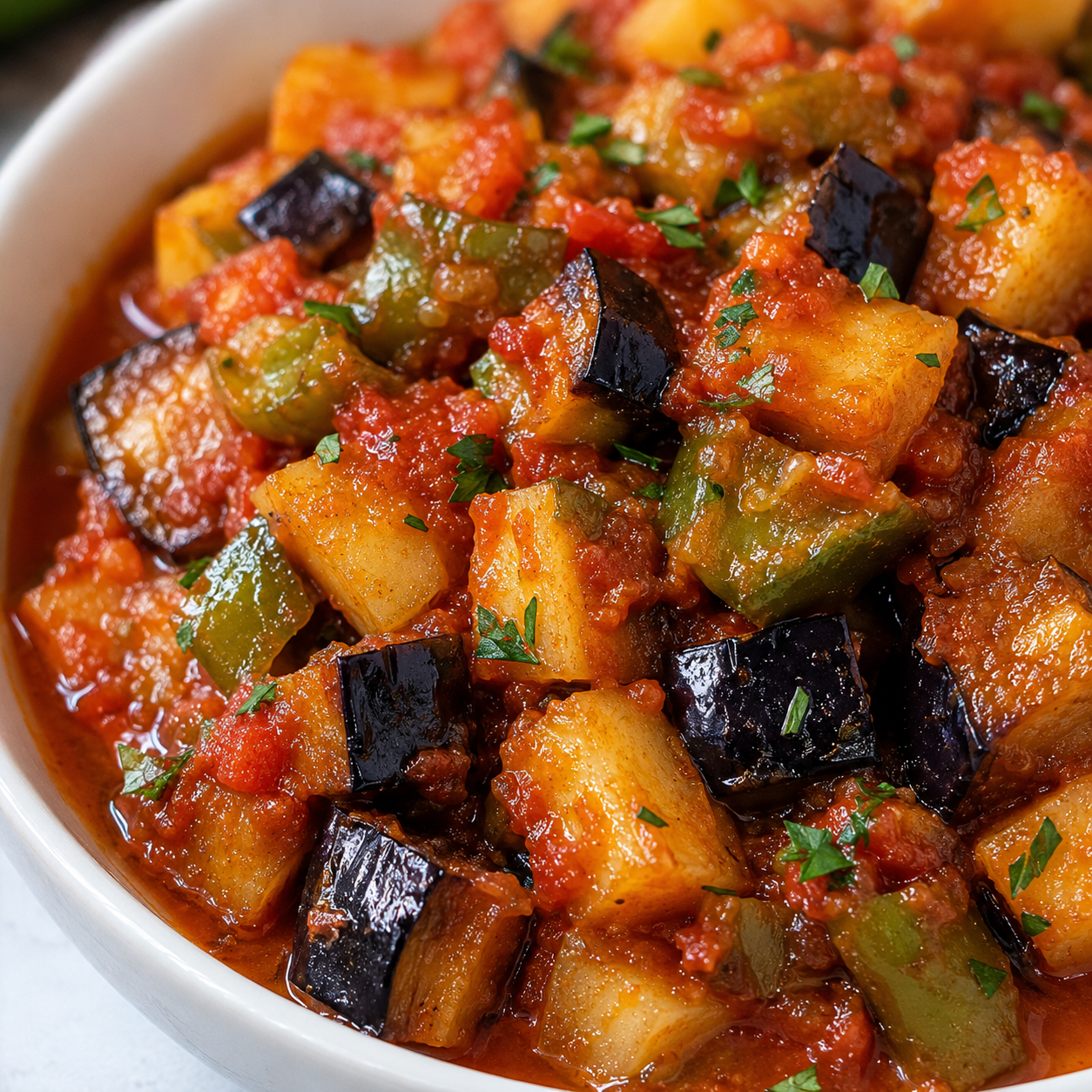
Şakşuka is one of the most beloved vegetable mezes in Turkish cuisine. Made with tender fried eggplants, potatoes, and peppers topped with a rich tomato-garlic sauce, this classic dish is a staple on meze tables throughout Turkey. It is flavorful, satisfying, and surprisingly simple to prepare.
Although many people outside Turkey confuse Şakşuka with Shakshuka, the two dishes are completely different. Turkish Şakşuka is a vegetable-based meze traditionally made with eggplants and olive oil, while Shakshuka is a North African dish featuring eggs poached in tomato sauce.
What makes Şakşuka special is its combination of textures and flavors. The vegetables become soft and creamy on the inside while maintaining slightly crisp edges. The bright tomato sauce adds freshness and acidity, while garlic provides depth and aroma. Served cold or at room temperature, Şakşuka is the perfect appetizer, side dish, or addition to a Mediterranean-style meze spread.
The beauty of this recipe lies in its flexibility. Different regions of Turkey prepare Şakşuka in slightly different ways. Some include potatoes, others focus mainly on eggplants and peppers, while some families serve it with garlic yogurt. Regardless of the variation, eggplant remains the star ingredient.
Whether you’re planning a Turkish-themed dinner, preparing a summer gathering, or simply looking for a delicious vegetarian dish, Şakşuka is a recipe you’ll find yourself making again and again.
Recipe Information
- Prep Time: 20 minutes
- Cook Time: 30 minutes
- Total Time: 50 minutes
- Servings: 6 servings
- Difficulty: Easy
Ingredients
For the Vegetables
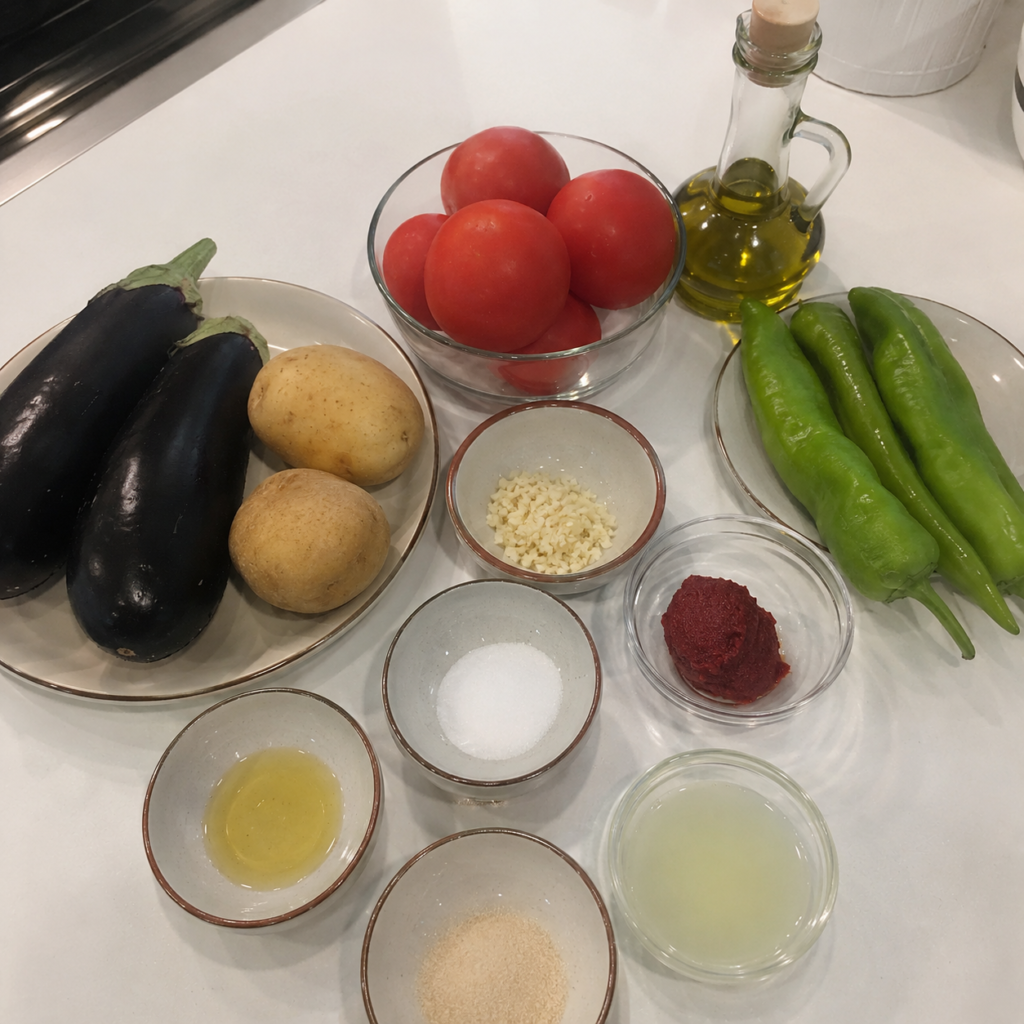
- 2 medium eggplants
- 2 medium potatoes
- 3 Turkish green peppers or 1 large green bell pepper
- ¾ cup olive oil (for frying)
For the Tomato Sauce
- 4 medium ripe tomatoes, grated
- 2 cloves garlic, finely minced
- 1 tablespoon tomato paste
- 1 teaspoon sugar
- 1 teaspoon salt
- 1 tablespoon vinegar
- 2 tablespoons olive oil
Optional Garnishes
- Fresh parsley
- Garlic yogurt
- Extra virgin olive oil
What Is Şakşuka?
Şakşuka is a traditional Turkish vegetable meze made from fried vegetables covered with a simple tomato sauce. Eggplants are considered the defining ingredient, while potatoes and peppers are common additions. The dish is typically served cold or at room temperature as part of a meze spread.
In Turkish homes, Şakşuka often appears alongside dishes such as Haydari, Hummus, Cacık, and stuffed grape leaves. It is especially popular during the summer months when tomatoes and eggplants are at their peak.
Why You’ll Love This Recipe
Rich Mediterranean Flavor
The combination of olive oil, garlic, tomatoes, and vegetables creates an irresistible Mediterranean taste.
Perfect Make-Ahead Dish
Şakşuka often tastes even better after resting for several hours.
Naturally Vegetarian and Vegan
No animal products are required, making it suitable for many dietary preferences.
Great for Entertaining
Because it is served cold, it can be prepared in advance.
Versatile Serving Options
Serve it as:
- Meze
- Appetizer
- Side dish
- Light lunch
- Picnic food
Instructions
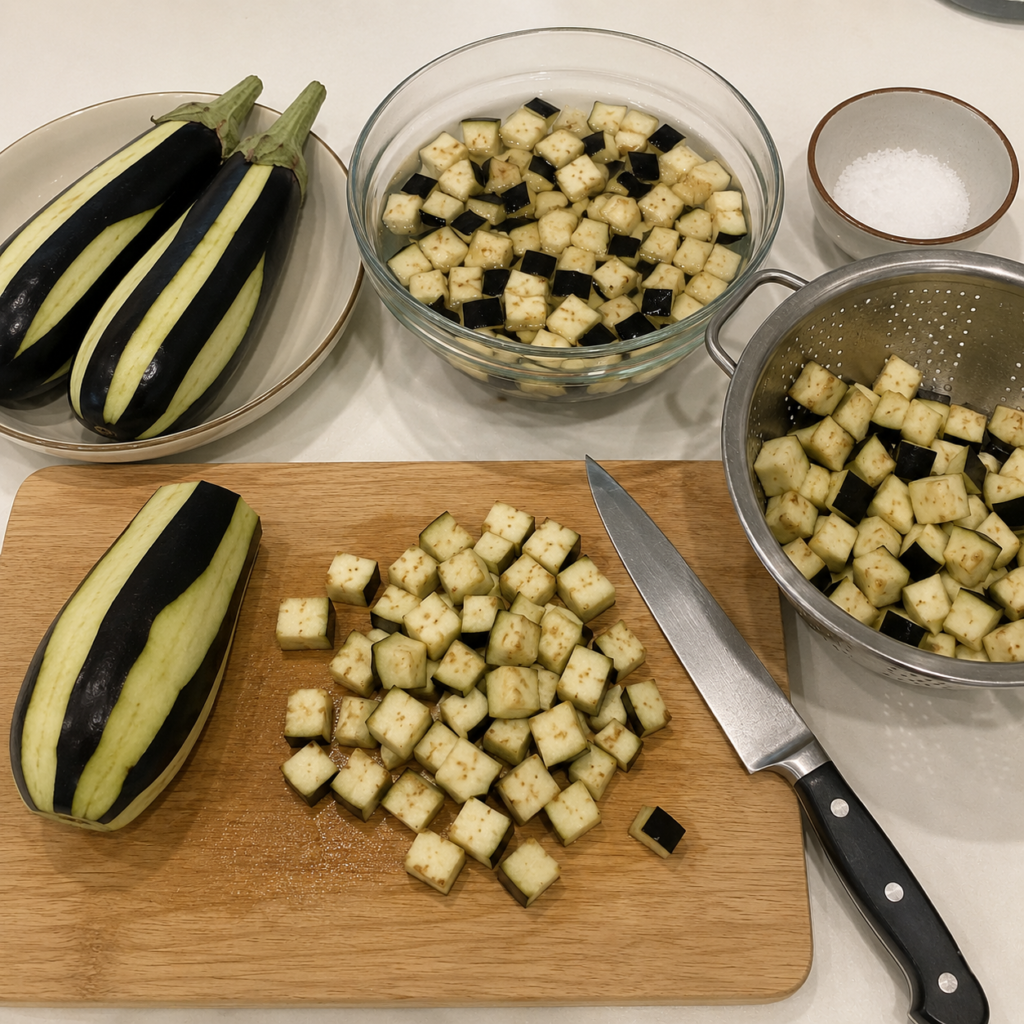
1. Prepare the Eggplants
Wash the eggplants thoroughly.
Using a vegetable peeler, remove strips of skin to create a zebra pattern.
Cut into bite-sized cubes.
Place the cubes in salted water for 20 minutes to reduce bitterness.
Drain and pat completely dry.
2. Prepare the Potatoes
Peel the potatoes.
Cut them into cubes similar in size to the eggplant pieces.
Dry thoroughly with paper towels.
3. Prepare the Peppers
Remove seeds and stems.
Cut the peppers into medium-sized chunks.
Try to keep all vegetables approximately the same size for even cooking.
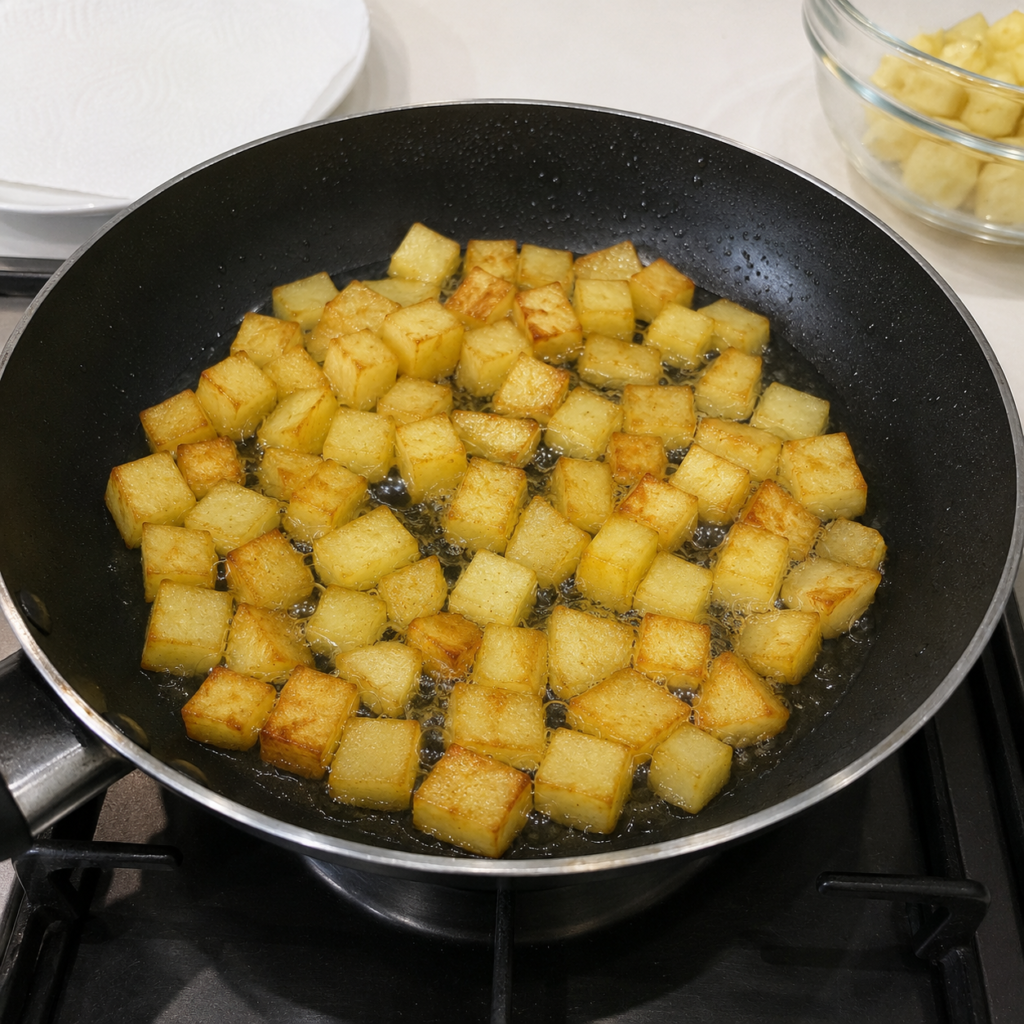
4. Fry the Potatoes
Heat olive oil in a large frying pan.
Add the potatoes and fry until golden brown and tender.
Transfer to a paper towel-lined plate.
5. Fry the Peppers
Add the peppers to the same oil.
Cook for several minutes until softened.
Transfer to the plate with the potatoes.
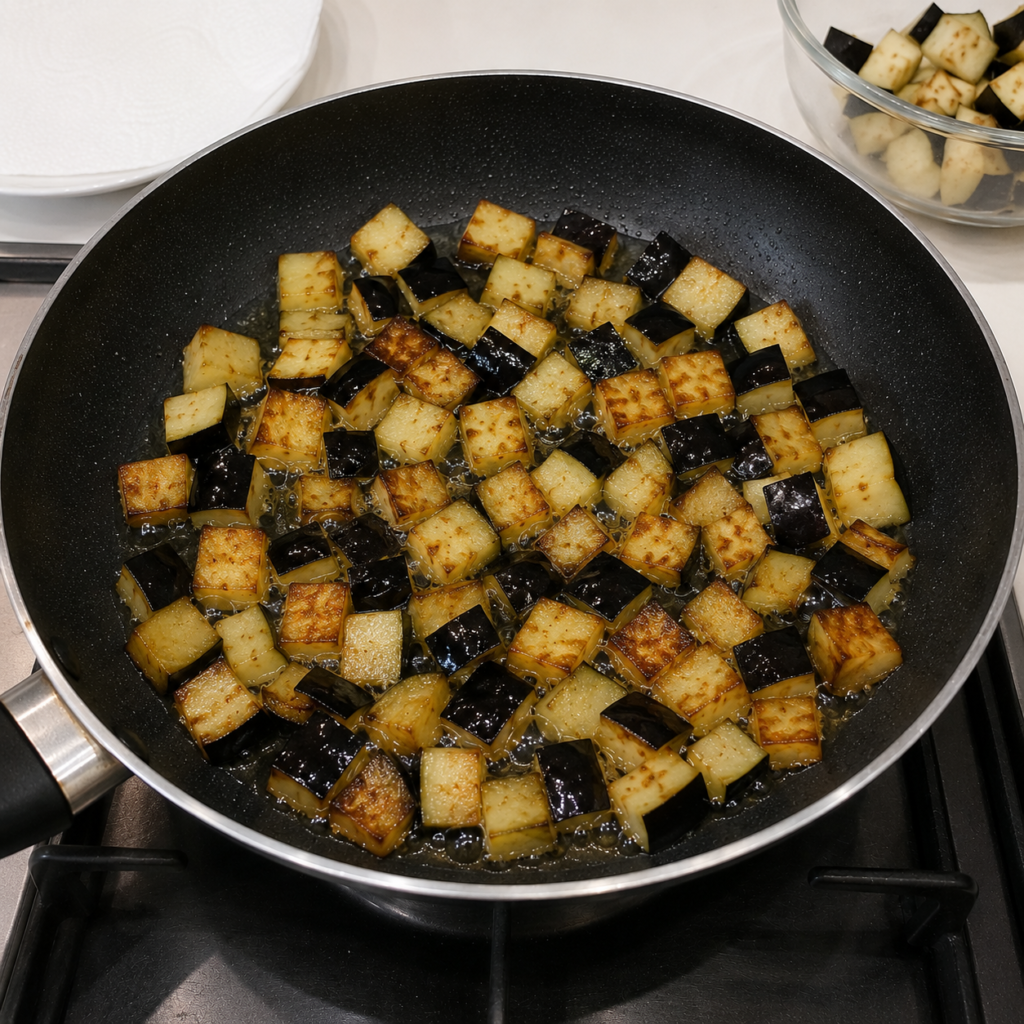
6. Fry the Eggplants
Carefully add the eggplants.
Cook until tender and lightly golden.
Avoid overcrowding the pan.
Transfer to paper towels to absorb excess oil.
7. Prepare the Tomato Sauce
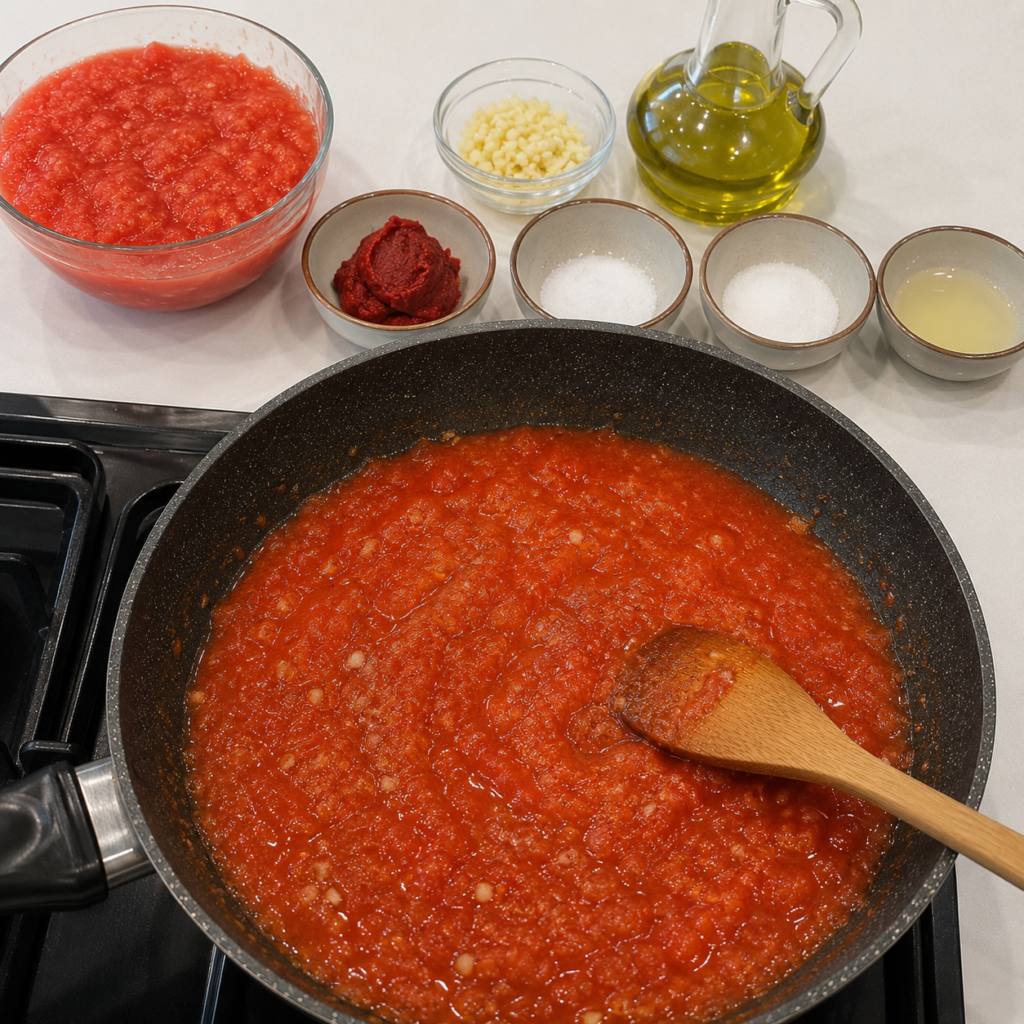
Heat olive oil in a saucepan.
Add the garlic and cook for 30 seconds.
Stir in:
- Grated tomatoes
- Tomato paste
- Sugar
- Salt
- Vinegar
Simmer for approximately 15 minutes until thickened.
8. Combine the Vegetables
Place the potatoes, peppers, and eggplants in a large serving dish.
Mix gently.
Avoid breaking the vegetables.
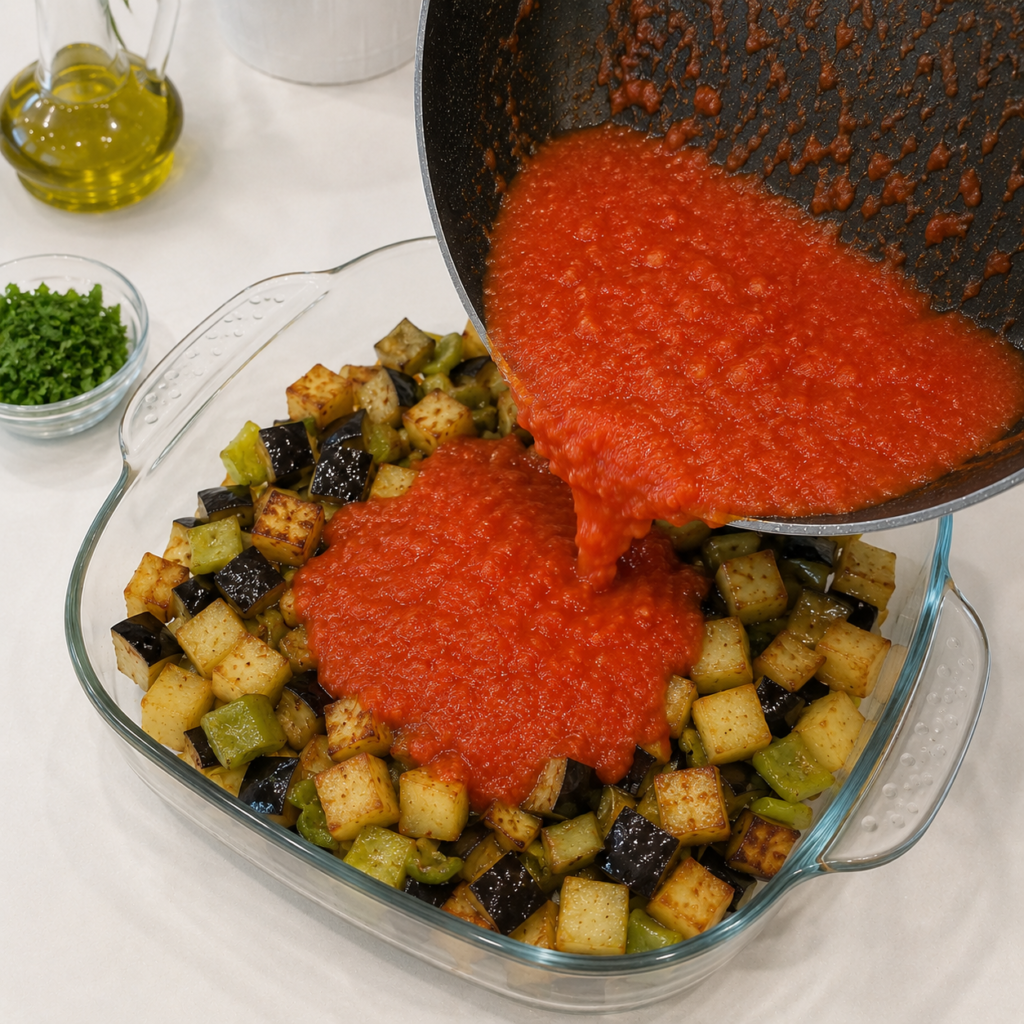
9. Add the Sauce
Pour the warm tomato sauce over the vegetables.
Allow the sauce to settle naturally between the vegetables.
10. Cool and Serve
Let the dish cool completely.
Serve at room temperature or chilled.
Garnish with parsley and a drizzle of olive oil.
Things to Consider
Dry the Vegetables Well
Any moisture remaining on the vegetables can cause oil splattering and prevent proper browning.
Don’t Overcrowd the Pan
Cook vegetables in batches if necessary.
Crowding lowers oil temperature and results in soggy vegetables.
Use Ripe Tomatoes
Fresh summer tomatoes create the best sauce.
Quality Olive Oil Matters
Olive oil is a key flavor component in this dish. High-quality oil significantly improves the final result.
The Difference Between Şakşuka and Shakshuka
Many people assume these dishes are the same due to their similar names.
However:
Turkish Şakşuka
- Eggplant-based
- Served cold
- No eggs
- Meze or appetizer
- Vegetable-focused
Shakshuka
- Tomato-based sauce
- Contains poached eggs
- Usually served hot
- Popular breakfast dish
- Originates from North Africa and the Middle East
These are entirely different recipes despite the similarity in names.
Traditional Variations
Yogurt Şakşuka
Serve with garlic yogurt for extra creaminess.
Spicy Şakşuka
Add chili flakes or hot peppers.
Roasted Vegetable Version
Instead of frying, roast the vegetables for a lighter option.
Zucchini Variation
Replace part of the eggplant with zucchini.
Make-Ahead Tips
Şakşuka is ideal for meal preparation.
Many Turkish cooks prepare it one day ahead because the flavors deepen overnight.
Store in the refrigerator and bring to room temperature before serving.
Storage
Refrigerator
Store in an airtight container for up to 5 days.
Freezer
Freeze for up to 2 months.
Thaw overnight before serving.
Reheating
Although traditionally served cold, it may also be gently warmed.
Serving Suggestions
Şakşuka pairs beautifully with:
- Fresh crusty bread
- Pita bread
- Turkish village bread
- Grilled chicken
- Grilled fish
- Lamb kebabs
- Rice pilaf
It also works perfectly alongside classic Turkish mezes such as:
- Haydari
- Hummus
- Cacık
- Mercimek Köftesi
- Stuffed grape leaves
Frequently Asked Questions
Can I make Şakşuka ahead of time?
Yes.
It often tastes better after several hours in the refrigerator.
Can I bake instead of fry?
Absolutely.
Roasting the vegetables creates a lighter version while maintaining excellent flavor.
Is Şakşuka vegan?
Yes.
The traditional recipe contains no animal products.
Can I use canned tomatoes?
Yes.
However, fresh ripe tomatoes provide the best flavor.
Health Benefits
Eggplants
Rich in fiber and antioxidants.
Tomatoes
Provide vitamin C and lycopene.
Olive Oil
Contains heart-healthy monounsaturated fats.
Peppers
Offer vitamins A and C while adding sweetness and color.
Tips for the Best Şakşuka
- Use firm eggplants.
- Dry vegetables thoroughly before frying.
- Fry vegetables separately.
- Simmer the tomato sauce until thick.
- Use quality olive oil.
- Allow the dish to cool completely.
- Serve at room temperature.
- Prepare ahead whenever possible.
Final Thoughts
Turkish Şakşuka is one of the most iconic mezes in Turkish cuisine. Combining tender eggplants, potatoes, and peppers with a rich tomato-garlic sauce, it delivers incredible flavor from simple ingredients.
Its versatility, make-ahead convenience, and Mediterranean character make it ideal for both casual family meals and elegant entertaining. Whether served as part of a large meze table or enjoyed with warm bread as a light lunch, Şakşuka always brings authentic Turkish flavor to the table.
Once you try homemade Şakşuka, you’ll understand why it has remained a favorite in Turkish kitchens for generations.
Afiyet olsun!