 By Fatih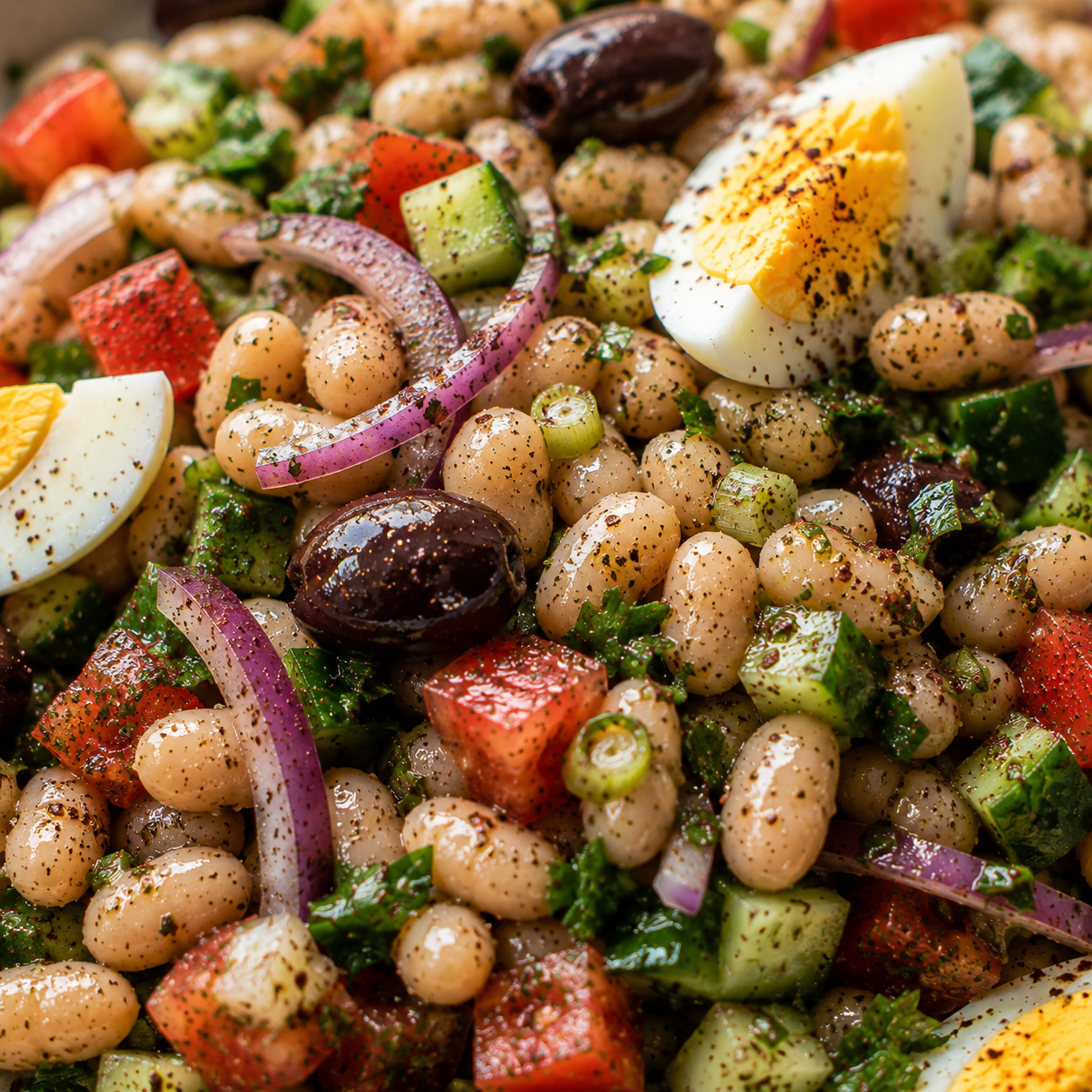
Turkish Bean Salad, commonly known as Fasulye Piyazı or simply Piyaz, is one of the most popular salads in Turkish cuisine. Made with tender white beans, crisp vegetables, fresh herbs, olive oil, and lemon juice, this refreshing dish is both hearty and healthy.
Served throughout Türkiye as a meze, side dish, or even a light meal, Piyaz has been a staple of Turkish home cooking for generations. While every region has its own variation, the foundation remains the same: creamy beans paired with bright Mediterranean flavors.
What makes Turkish Bean Salad special is its ability to be both satisfying and refreshing at the same time. The beans provide protein and substance, while the vegetables, herbs, and citrus dressing keep the dish light and vibrant.
It is equally at home alongside grilled meats, kebabs, seafood, or as part of a large meze spread. Many Turkish families also enjoy it as a standalone lunch with fresh bread and a glass of tea.
Whether you’re looking for a nutritious vegetarian dish, a make-ahead salad for gatherings, or an authentic taste of Turkish cuisine, this traditional bean salad is a wonderful addition to your recipe collection.
Why You’ll Love This Recipe
- Authentic Turkish recipe
- High in protein and fiber
- Naturally vegetarian
- Budget-friendly ingredients
- Easy to prepare
- Great for meal prep
- Perfect for picnics and gatherings
- Healthy Mediterranean flavors
- Delicious served cold or at room temperature
Recipe
- Preparation Time: 20 minutes
- Cooking Time: 60 minutes (if using dried beans)
- Total Time: 1 hour 20 minutes
- Servings: 6 servings
- Cuisine: Turkish
- Course: Salad, Side Dish, Meze
Ingredients
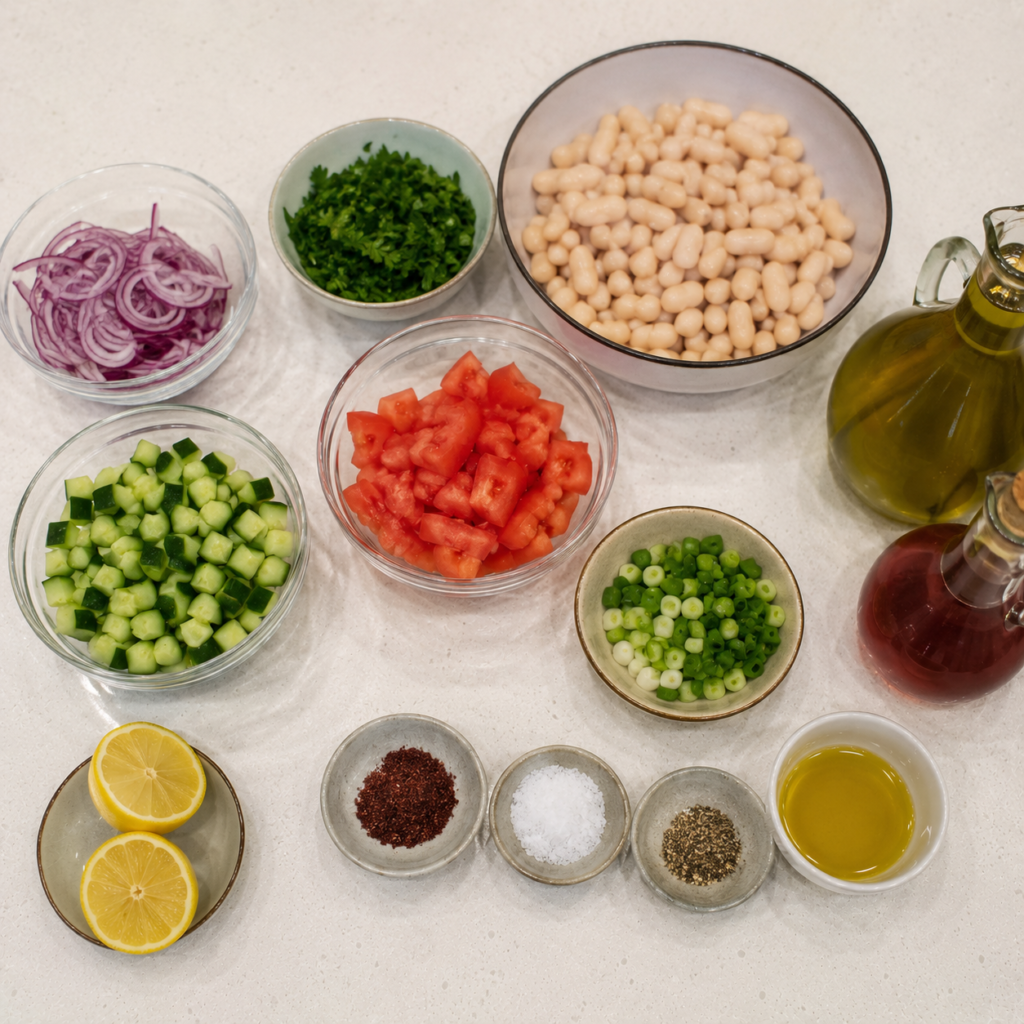
For the Salad
- 3 cups cooked white beans (cannellini or navy beans)
- 1 medium red onion, thinly sliced
- 2 medium tomatoes, diced
- 1 small cucumber, diced
- 4 green onions, sliced
- ½ cup fresh parsley, finely chopped
For the Dressing
- 4 tablespoons extra virgin olive oil
- Juice of 2 lemons
- 1 tablespoon red wine vinegar
- 1 teaspoon salt
- ½ teaspoon black pepper
- ½ teaspoon sumac
Optional Garnishes
- Hard-boiled eggs, sliced
- Black olives
- Extra parsley
- Sumac
- Red pepper flakes
Instructions
1. Prepare the Beans
If using dried beans, soak them overnight.
Drain and rinse.
Cook until tender but not mushy.
Allow them to cool completely.
If using canned beans, rinse and drain thoroughly.
2. Prepare the Onion
Thinly slice the red onion.
Place it in a bowl with a pinch of salt and a little lemon juice.
Gently massage the onions for a minute.
This softens their sharpness.
3. Chop the Vegetables
Dice the tomatoes and cucumber.
Slice the green onions.
Finely chop the parsley.
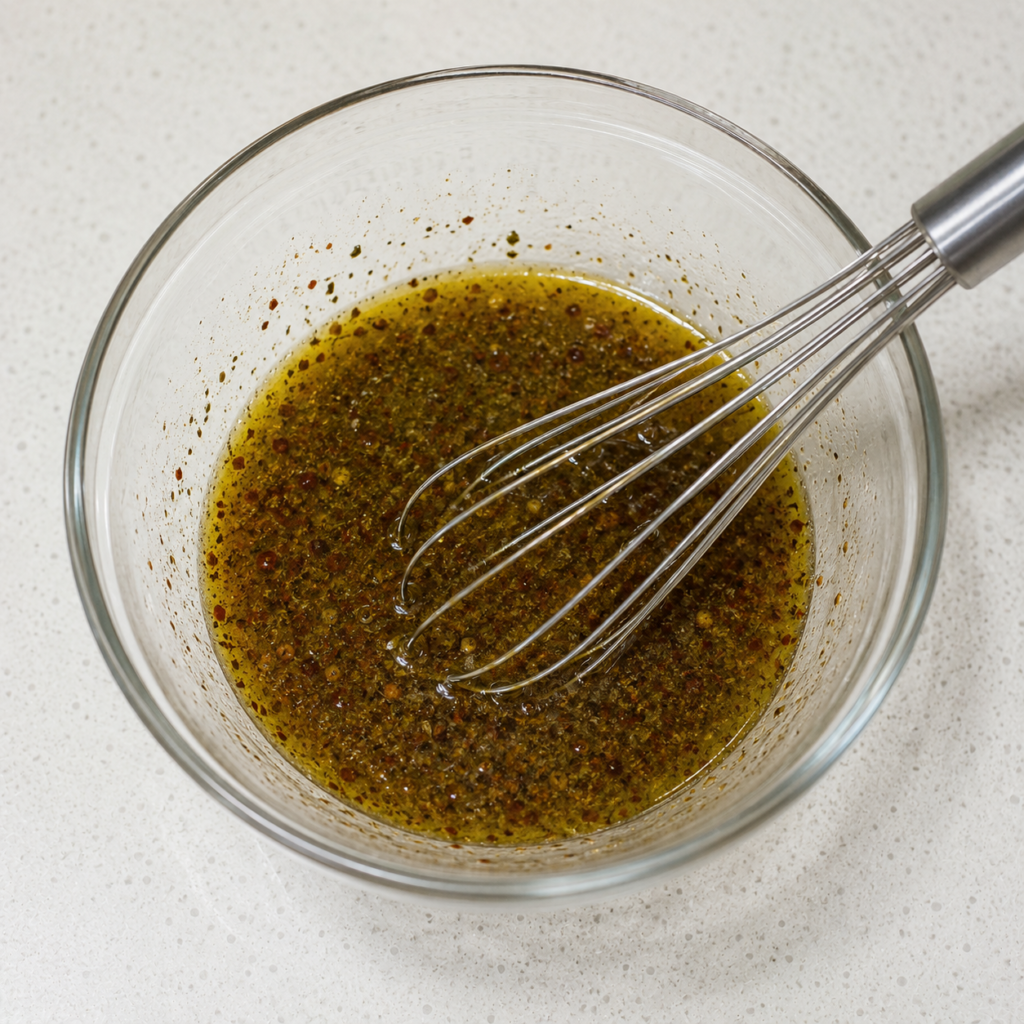
4. Make the Dressing
In a small bowl, whisk together:
- Olive oil
- Lemon juice
- Vinegar
- Salt
- Black pepper
- Sumac
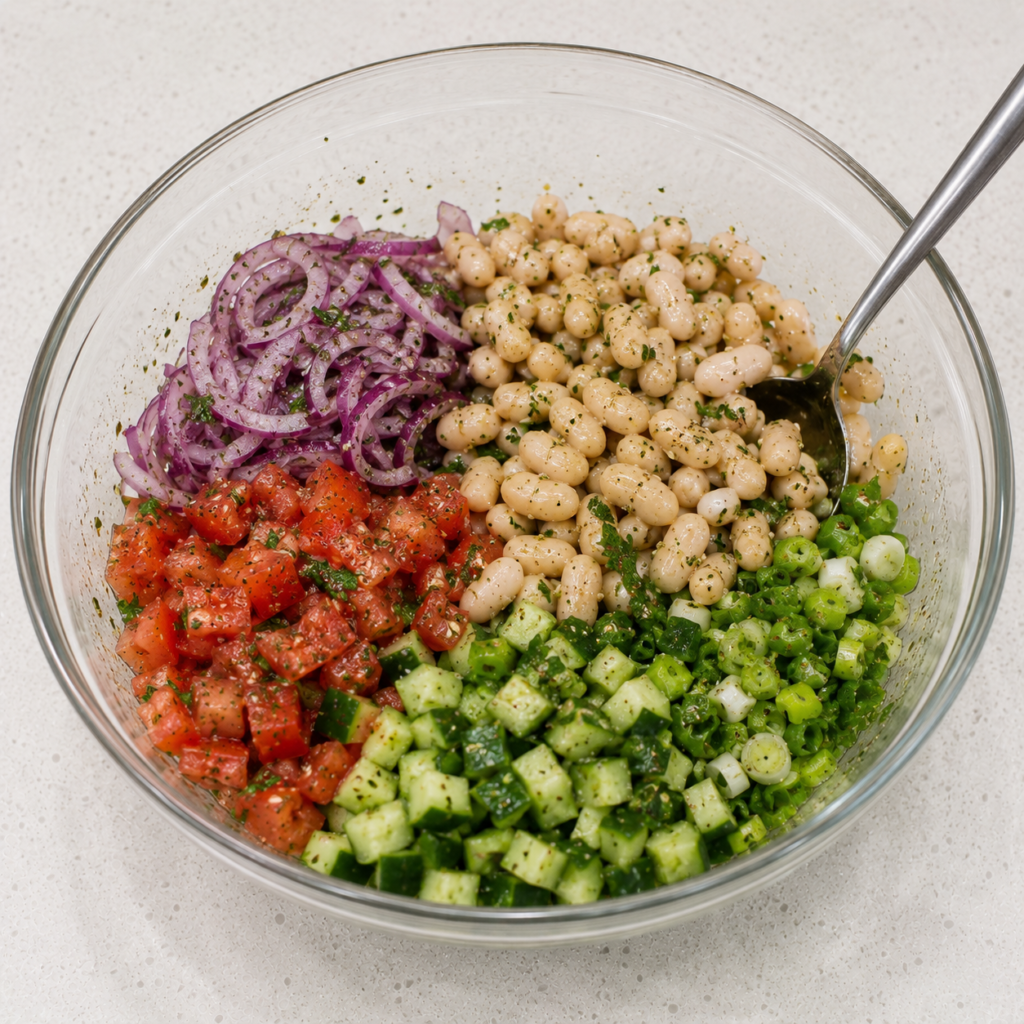
5. Combine the Ingredients
In a large mixing bowl, add:
- White beans
- Red onions
- Tomatoes
- Cucumber
- Green onions
- Parsley
6. Add the Dressing
Pour the dressing over the salad.
Gently toss until everything is evenly coated.
7. Rest the Salad
Allow the salad to sit for 15–20 minutes.
This helps the flavors blend.
8. Taste and Adjust
Taste the salad.
Adjust salt, lemon juice, or olive oil if necessary.
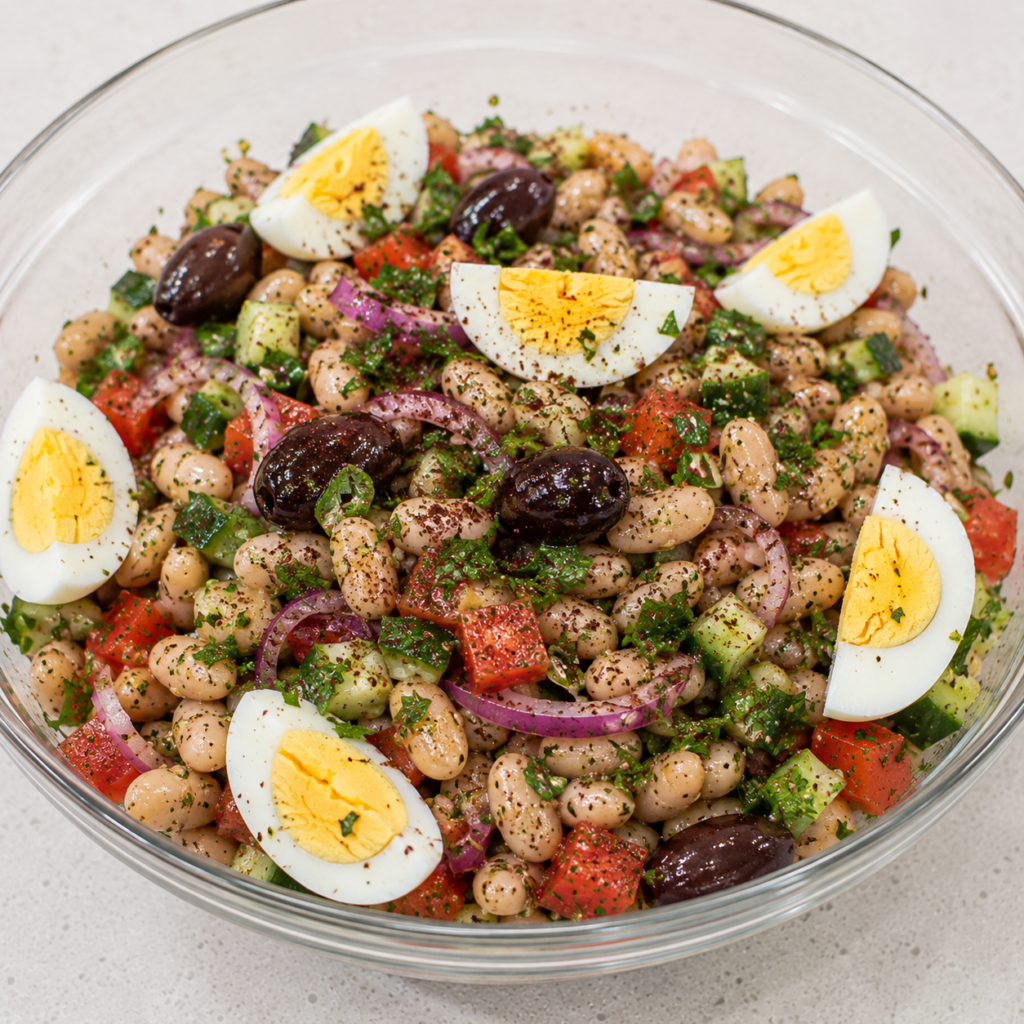
9. Garnish
Top with sliced hard-boiled eggs, olives, parsley, and additional sumac.
10. Serve
Serve chilled or at room temperature.
Accompany with crusty bread or grilled dishes.
What Is Piyaz?
Piyaz is a traditional Turkish salad centered around beans and onions.
The word “piyaz” originally referred to onion salads in Ottoman cuisine, but over time it evolved into the bean-based dish that is widely recognized today.
Different regions prepare Piyaz differently.
Some versions include:
- Tahini
- Eggs
- Garlic
- Vinegar-heavy dressings
Others keep it simple with olive oil and lemon.
Regardless of regional differences, beans remain the heart of the dish.
The Role of White Beans
White beans provide the foundation for Turkish Bean Salad.
Their mild flavor allows the dressing and vegetables to shine while contributing substantial nutrition.
White beans offer:
- Plant-based protein
- Dietary fiber
- Iron
- Magnesium
- Potassium
Their creamy texture also contrasts beautifully with the crisp vegetables.
Why Red Onion Matters
Red onion is one of the defining ingredients of authentic Piyaz.
Its sharp flavor balances the richness of the beans.
Massaging the onions with salt and lemon juice softens their intensity while preserving their freshness.
This simple technique dramatically improves the final dish.
The Mediterranean Influence
Turkish Bean Salad perfectly reflects the principles of Mediterranean cooking.
It emphasizes:
- Legumes
- Fresh vegetables
- Olive oil
- Herbs
- Citrus
These ingredients create meals that are flavorful, nutrient-dense, and satisfying without being heavy.
Things to Consider
Don’t Overcook the Beans
The beans should hold their shape.
Mushy beans will affect the texture of the salad.
Use Fresh Lemon Juice
Fresh lemon juice provides superior flavor.
Allow Time to Rest
A brief resting period allows the dressing to penetrate the beans.
Season Carefully
Beans absorb seasoning well, so taste before serving.
Traditional Variations
Antalya-Style Piyaz
Perhaps the most famous regional version.
Includes:
- Tahini
- Garlic
- Vinegar
The dressing becomes rich and creamy.
Egg-Topped Piyaz
Common throughout Türkiye.
Hard-boiled eggs add extra protein and visual appeal.
Olive Version
Black olives provide additional Mediterranean flavor.
Spicy Piyaz
Red pepper flakes add gentle heat.
Herb-Rich Version
Extra parsley and fresh dill create a brighter salad.
Why Turkish Bean Salad Is Perfect for Meal Prep
This salad stores exceptionally well.
Benefits include:
- Improved flavor after resting
- Easy transport
- Minimal preparation before serving
- Excellent refrigerator life
For these reasons, many people prepare it a day in advance.
Best Foods to Serve with Piyaz
Turkish Kebabs
Piyaz is traditionally paired with:
- Köfte
- Adana kebab
- Chicken shish
Grilled Fish
The acidity of the salad complements seafood beautifully.
Bread
Fresh Turkish bread is a classic accompaniment.
Meze Platters
Serve alongside:
- Hummus
- Haydari
- Muhammara
- Eggplant Salad
- Stuffed Grape Leaves
Rice Dishes
The salad balances richer rice-based meals.
Storage
Refrigerator
Store in an airtight container for up to 4 days.
Before Serving
Toss gently and refresh with lemon juice if needed.
Freezing
Not recommended.
Vegetables lose their texture after thawing.
Health Benefits
Turkish Bean Salad is highly nutritious.
White Beans
Provide:
- Protein
- Fiber
- Iron
- Folate
Vegetables
Contribute vitamins, minerals, and antioxidants.
Olive Oil
Provides heart-healthy monounsaturated fats.
Lemon Juice
Adds vitamin C and freshness.
The result is a balanced dish that supports a healthy Mediterranean-style diet.
Tips for Success
- Cook beans until tender but firm.
- Use fresh vegetables.
- Slice onions thinly.
- Massage onions before adding.
- Use quality olive oil.
- Allow resting time.
- Taste before serving.
- Garnish generously.
Frequently Asked Questions
Can I use canned beans?
Yes. They are convenient and work very well.
Is Piyaz served cold?
Usually yes, although room temperature is also common.
Can I make it ahead of time?
Absolutely. The flavor often improves after several hours.
What beans work best?
Cannellini beans and navy beans are traditional choices.
Can I add tahini?
Yes. Antalya-style Piyaz uses a tahini-based dressing.
How long does it last?
Up to 4 days when refrigerated properly.
Final Thoughts
Turkish Bean Salad, or Fasulye Piyazı, is one of the most beloved salads in Turkish cuisine. Combining tender white beans, crisp vegetables, fresh herbs, olive oil, and lemon juice, it delivers a perfect balance of freshness and satisfaction.
Whether served alongside kebabs, included in a meze spread, or enjoyed as a light lunch, this traditional salad showcases the simplicity and elegance of Mediterranean cooking. Its nutritious ingredients, vibrant flavors, and easy preparation make it a recipe you’ll return to again and again.
Once you try authentic Turkish Bean Salad, you’ll understand why it has remained a staple of Turkish tables for generations.
Afiyet olsun!